March 15-25, 2026
11 days to refresh your mind, reclaim your attention, and rejuvenate your participation in life . . . no kitchari required
Seasonal resets are one of the cornerstones of Āyurveda—and one of the main ways this traditional medical science has been misunderstood and distorted in modern culture. The intent of a seasonal reset is to support the natural transition of doṣas by reducing potential disturbances to agni. In other words, to slow down, turn inward, and give space for digestion of accumulated doṣa and make way for a new set of qualities and elements.
Instead, Āyurvedic “cleanses” have become another expression of diet culture, extreme lifestyle habits, and biohacking. Living out of rhythm with nature for 12 weeks of the season, then expecting to turn it all around in just one, asks a lot of your body—and usually leaves you feeling pretty gross the whole time. Plus, if you have a significant imbalance, you’ll always need to tend to that first, making a “cleanse” inappropriate until you’re, well, mostly healthy. And in that case, during the change of the seasons, you’ll most likely naturally crave something different in your foods and routines that will suit the new doṣa in charge. No punishing restrictions or “cleansing” required.
Seasonal dietary resets are best when the system is already closer to balance than not—when the main doṣic influences are external (weather, climate, etc.) not internal.
I do believe that, when done with integrity, a seasonal reset can do wonders for the body. But an even more profound—and accessible—approach gets out of the way of the body’s innate desire to move toward balance by addressing the root cause of many of our less-healthy habits: the mind.
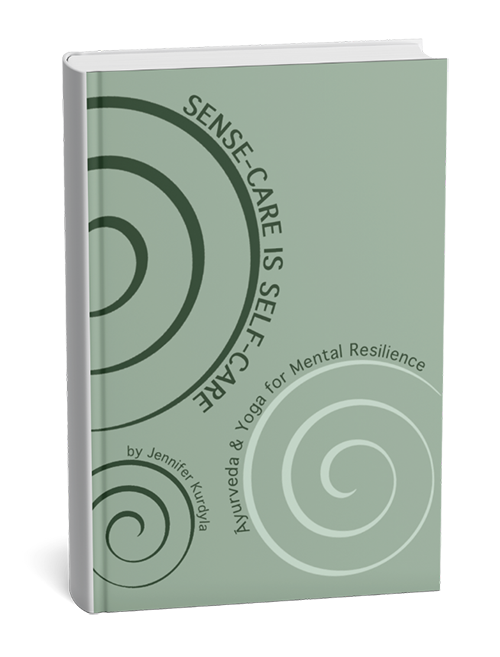
As I write about in my new book, the mind’s instincts and urges and reactions aren’t “bad”—they’re part of our powerful survival mechanisms AND what allows us to experience the fullness of life. What determines the state of the mind—whether we’re jumpy and defensive and clenched, or settled and welcoming and soft—are our senses. The mind is a direct recipient of the information the senses take in from the outside world. Depending on that content, and the structural integrity of the sense organs themselves, the mind will be focused on damage control OR be able to be informed by the wisdom of our higher mind—our spirit—that knows what is true and in alignment for us.
Addressing these forces influencing the mind isn’t always easy, but it can be simple. And that’s what we’re doing this spring—together.
On the days leading up to and following the Spring Equinox—the true “new year” according to Nature’s calendar—we’ll spend time tending to our senses. As any gardener knows, caring for the land includes a rhythm of both pruning and sowing—getting rid of what’s no longer vital to make room for new growth. I’m always hesitant to cut back my houseplants, but then when they start growing in fuller and more vibrant I realize the value in letting go. The same instincts can come over the mind: we want to hold on to what we know because it’s safe and familiar, but it might be hindering a beautiful new bloom.
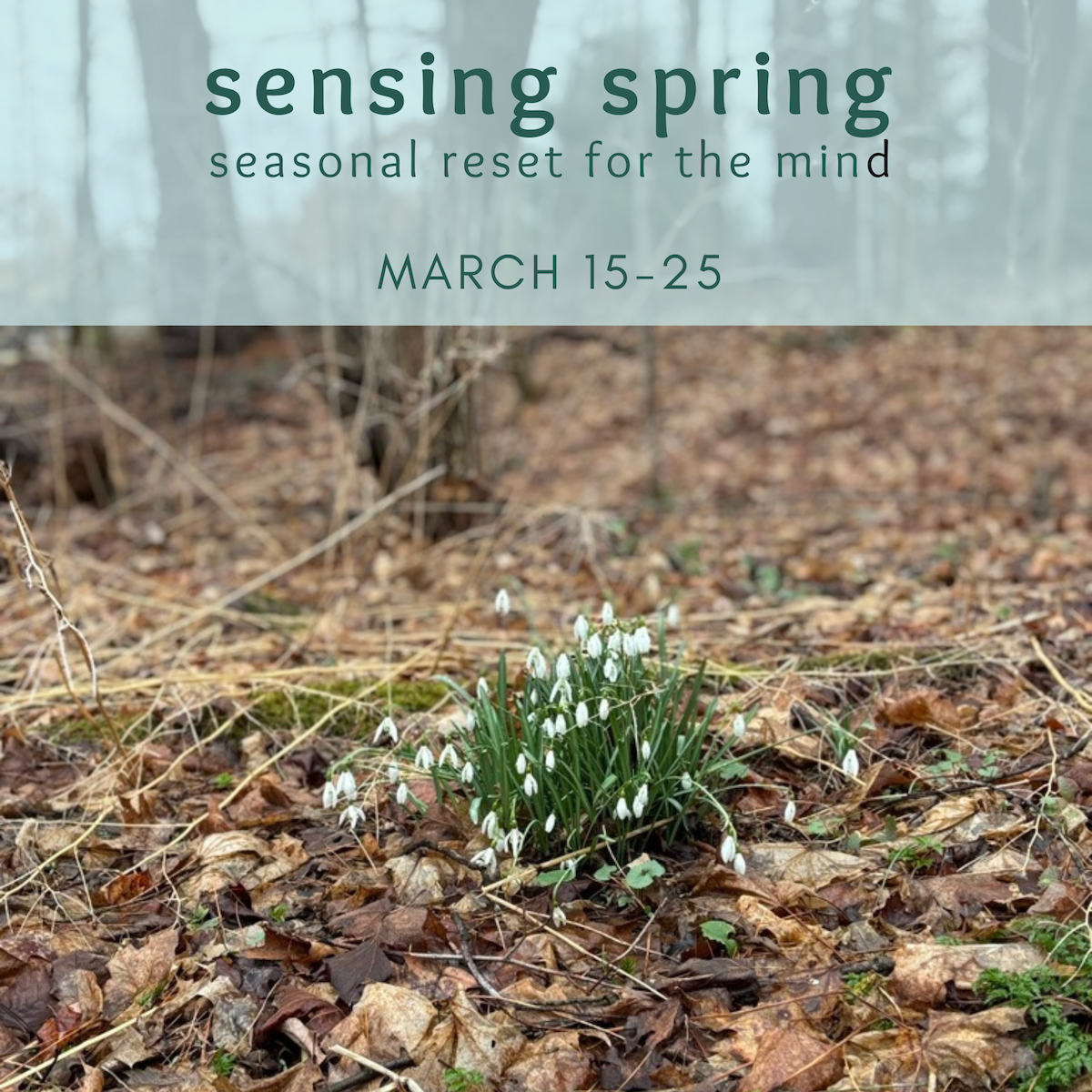
Over these eleven days, we’ll take a spiral tour through the senses and their corresponding elements, pruning unnecessary stimuli to clear space for whatever we need to receive this season. At the quiet fulcrum of the Equinox, we’ll have access to deep communication from our body via the psoas and its elusive, knowing “sixth sense.” Then, with the growing light in the macrocosm, we’ll relish the energy and prāṇa we need to fully embody ourselves in the five-elemental world. Like early spring plants—snowdrops, crocuses, daffodils—we’ll emerge bravely and tenderly, with sensitivity to our environment as a superpower that can help us make choices that align with longevity and integrity.
Schedule
Laṅghana—reducing, lightening
March 15—sound
March 16—touch
March 17—sight
March 18—taste
March 19—smell
March 20 {Equinox}—”the sixth sense”—integrating through the psoas and listening to the deep “core” of the Self
Bṛṃhaṇa—nourishing, building
March 21—smell
March 22—taste
March 23—sight
March 24—touch
March 25—sound
What’s Included
11 daily emails with a prompt/reflection/practice to gradually reduce, then gradually nourish, all of the senses
2 seasonal recipes
2 short movement practices
2 guided meditation/prāṇāyama practices
downloadable sense-care worksheet
Cost
$36
Early bird discount: $27 until March 10—no code required