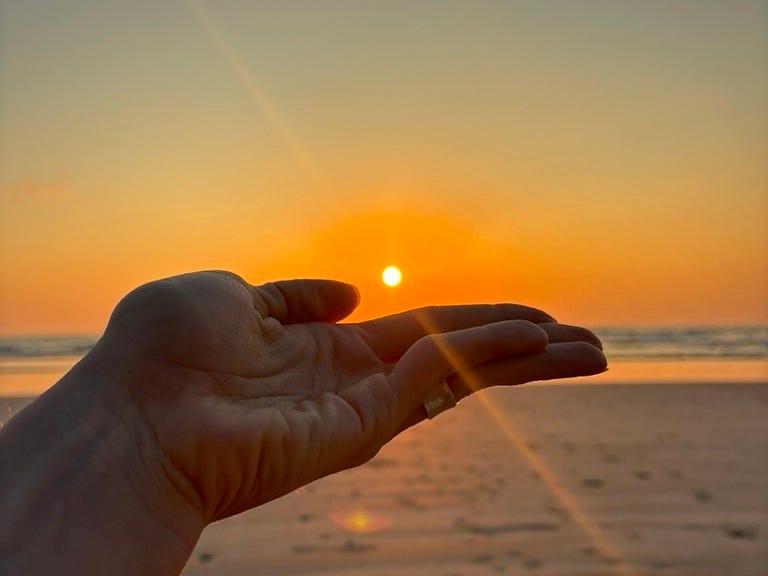
I wouldn’t call myself a fan of summer. Although my constitution tends to run cold, the intense heat and humidity in my neck of the woods has never provided the “opposites balance” kind of medicine you’d expect. The relentlessness of the sun wears me out, which for years I’d been able to mitigate with steady access to air conditioning. It wasn’t until the first COVID summer that I really appreciated the term “burnout.” Yes, I’d been a victim of mental burnout before, but by August of 2020 I started to notice I was not quite myself. I was in a perpetual state of low-level frustration and irritability. Between the stress and trauma of the pandemic, and being stuck inside my un-air conditioned apartment all day every day (I live on the fifth floor with all my windows on one side, so basically a greenhouse), I was melted, fried, scorched. One fateful day that summer, I spent hours in the kitchen making dishes for the photo shoot for my cookbook, Root & Nourish. Even with two fans going, the heat was unbearable. But I stuck it out for my art, and at the end of the day I wasn’t totally surprised when, while washing the enormous pile of dishes and pans and general mess I’d made, I started bawling. I had to stop mid-wash to sit on the couch, where a flood of totally unrelated emotions spilled out of me. After I was done crying, I finished the dishes and then found myself on hands and knees scrubbing all the cabinet doors and the oven. What demon had possessed me? (It should be said that I felt not a lick of hunger this whole time, so I couldn’t even soothe myself with my creations.)
Even beyond physiology, the attitude of summer—at least the dominant attitude—doesn’t agree with me. There’s an expectation of fun, escape, and relaxation, and competition to be the best at all these, that’s always felt forced and paradoxical to me. My family didn’t do travel or camp, and my nervous system likes routine, so as a student I leaned into one flavor of summer “expectations” that those two months off of school should be “productive”—occupied by reading lists, extra studying, part-time jobs and internships, thesis research etc. I’d happily create my own mini-curriculum for the summer and move to the rhythm of my ranging curiosity and appetite for stories. But my vacation-mode was always met with smirks and criticism by others. “Jennifer, just relax”—said my parents, my relatives, my friends. To me, the planning and scheduling and coordinating and making up for lost time that other people’s “relaxing” activities required never seemed worth it. There was a whole lot of doing involved in doing nothing.
Once I started studying Ayurveda, I found a loophole that made me feel less like I was a failure at doing summer the “right” way. Tis the season of pitta dosha, the dosha of heat, transformation, and digestion. Made of fire and water elements, pitta owns its nature with the most clarity and confidence of all the doshas, despite (or because of) its seemingly contradictory nature. We all know fire and water don’t really jive. But in pitta, the water acts as a container for the fire, giving the heat intensity, concentration, and a built-in checks and balances system. When in balance, pitta can do its job of breaking things down into their essence—without destroying itself. The epitome of controlled self-awareness, pitta exudes confidence and trustworthiness. Those with a dominance of pitta in their constitution are natural leaders, charismatic, and bright. They see what they want and exactly the path they need to take to get it; their sharp wits and tongues cut through the proverbial BS with direct questions, bullet-pointed emails, and a piercing gaze that practically drags the truth out of your heart.
So, too, is pitta season exacting and clear in its nature. Once the calendar turns to June, I sense myself being drawn to organization and precision. The gunas I need to stay happy and balanced in pitta season are obvious: cool, juicy, grounding but light. I stock my fridge with coconut water, aloe juice, and grapes. I make a big batch of brahmi coconut oil. Best have them on hand for when the inevitable heat wave strikes.
Unlike vata and kapha seasons, when imbalances seem to come out of nowhere and it takes a few weeks to remember what’s happening and why, there’s nothing disorienting or clouding pitta. The medicine of opposites applies here in vibrant technicolor. If you’re hot, get cold. If you’re tired, take a nap. If you’re hungry, eat—watermelon, guacamole, even salad (blasphemy!!); whatever you’re craving is fine because agni’s got you (there’s more to that story, but I’ll save that for another post). It’s easy to know how to balance qualities that are so extreme and obvious. It’s equally easy to remember what happens when you don’t give pitta what it wants—the consequences are fierce. Sun burn, heart burn, burnt out, hot and bothered—it’s hard to look away when your life is red, hot, inflamed.
Not having a lot of pitta in my constitution, I think summer offered a refreshing change of pace for my normally waffling and wandering disposition. My childhood approach to vacation-mode was an example of this. In that season of clarity and confidence, I could see myself—my preferences, my pleasures—in a way that I couldn’t at other times of the year. The cover-up came off, and there I was in my bathing suit ready for the sun to paint me in bronze. I knew that all I wanted was to read my book(s), off somewhere in moderate shade by myself. As a kid, I didn’t have enough confidence to defend my preferences from the stronger personalities around me, who needed to manage the season differently. I put my cover-up back on and tried to “go with the flow” of the tidal waves of pressure to “have fun” in ways that were not fun for me.
I could dive deeper into the particularities of this inner and outer conflict, but enough about me. In the spirit of pitta season (technically, astrological summer begins on June 1, so we’re in it, kids), I’ll cut to the chase. What I’ve gleaned from pitta and pitta season is that we cannot be afraid to be ourselves. In fact, it is our duty. As Krishna tells Arjuna in the Bhagavad Gita: “It is better to strive in one’s own dharma than to / succeed in the dharma of another. Nothing is ever lost in following one’s own dharma, but competition / in another’s dharma breeds fear and insecurity” (3.35). This dosha that is so not-me was the medicine-of-opposites that has helped me both see and accept the things that make me, me. It’s as simple as meeting hot with cold. Because when we work with states of opposition, we’re not trying to move the person or energy from one side of the spectrum to the other. We’re looking to create wholeness. It’s not yin or yang, but the yin inside the yang, and the yang inside the yin, and their sacred dance of longing to be in and with each other.
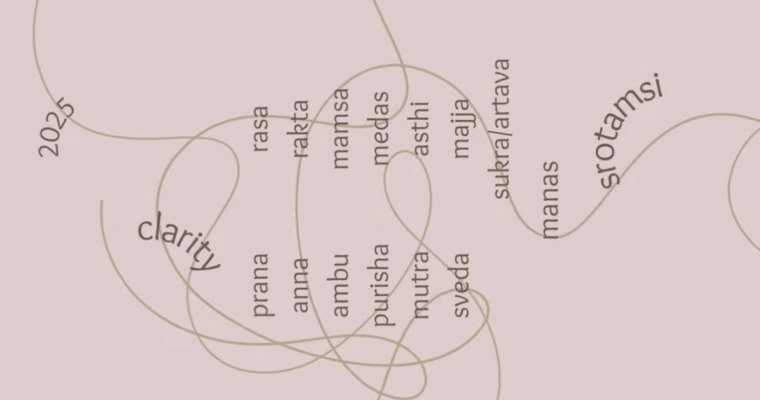
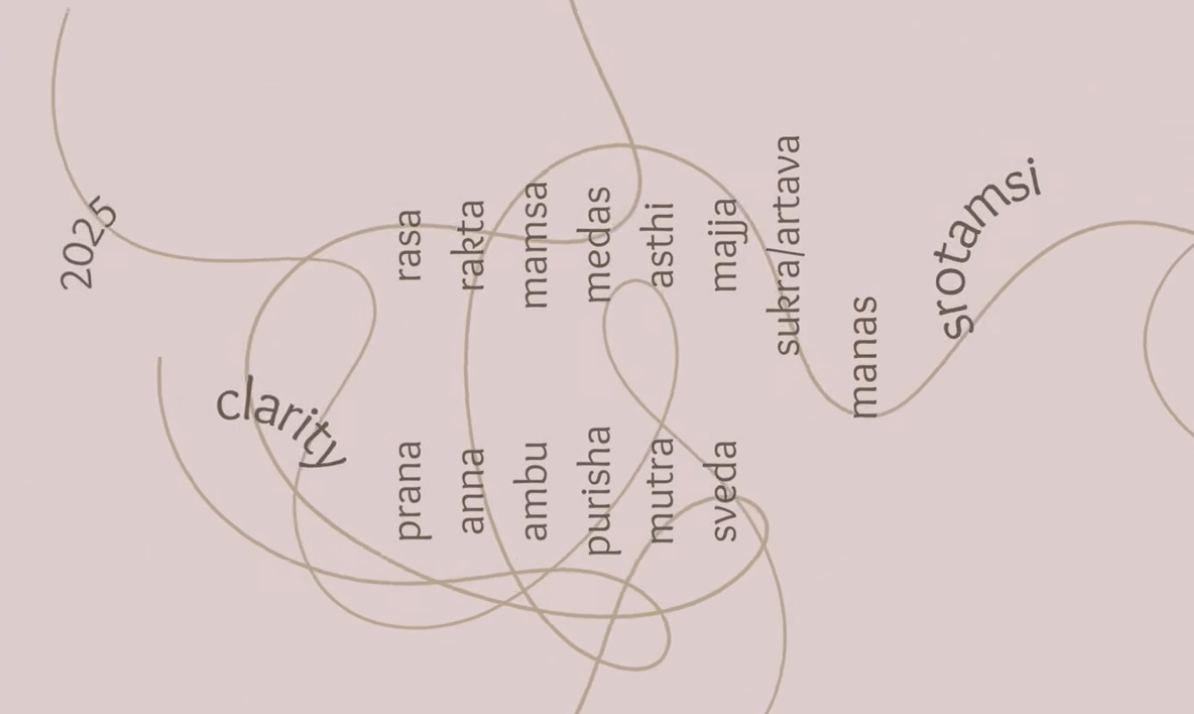
And there’s no better place to explore this state of being—the union of opposites, which I hear is a thing some people call Yoga ;)—than in rakta dhatu and raktavaha srotas: blood and its channel, which is my theme for June. This tissue-srotas pair is one of the simpler ones; in fact, per pitta season, the srotamsi for June, July, and August are all relatively straightforward, so you can look forward to some light summer reading (I told you I liked to plan). This doesn’t mean you get a free pass on your routines and self-care. In fact, it’s one of the worst times of year to “let things slide,” since the ramifications of letting pitta become excessive by the end of summer and into early fall are pretty uncomfortable and challenging to deal with (if you’ve ever been with a hangry person, you know what I mean).
I don’t want to stress you out and make it seem like you can’t have any fun. Hardly. Rather, the discipline here is in service of living unabashedly. Of owning your True Self—body, mind, soul. Of showing up for that Self as relentlessly as the sun shows up for us. This is the very function of rakta dhatu: jinvana, which means “life-giving” or “vitality.” So as we stand at the cusp of summer, we can set the collective intention of creating a curriculum for svadhyaya, or self-study. What does it feel like to live your life? What are you doing to support that feeling, and where have you fallen under someone else’s shadow? What parts of you can you give back to the sun to receive the blessing of sacred recognition and wholeness?
That will be 500 words due by September 1. Kidding (or am I…?).
Let’s begin with the basics. Last month, I explained the Ayurvedic view on digestion and nutrition that allows for the creation of the physical structures of the body, known as dhatus or tissues. Rasa is the first dhatu to be formed from our food, and it’s correlated with lymph, plasma, and all of the fluids throughout the body. From rasa, rakta dhatu, or blood, is formed. The main role of blood is to carry oxygen and other nutrients to the tissues, organs, and cells throughout the body. Without this vital circulation, we’d die—hence our innate fear of seeing blood outside of ourselves, where it very much doesn’t belong.
As a bodily fluid, rakta is not totally inseparable from rasa. Indeed, the “plasma” portion of rasa flows right alongside blood in the same channel system; the separate circulatory paths of lymph and blood overlay each other and both live pretty close to the surface of the skin. The pair are what make the external surface of the body such an excellent barrier to the outside world, and insulator for our individual bodies. Rasa and rakta provide softness, suppleness, color, and temperature to the skin, all of which help regulate our internal environment and support the most basic self-defense mechanism we have: immunity. The skin is a physical barrier to all sorts of pathogens and substances that would cause harm and disease if they had direct access to our inner fluids; likewise, the microbiome of the skin is extremely robust, so even if something manages to get inside there’s an army of bacteria who can take care of it.
These functions of the skin are why we care for it so deeply in Ayurveda, namely through the sense-care practice of abhyanga. This ritual of massaging the skin with oil maintains the skin’s natural protective functions at both the physical and psychological levels. Through gentle, loving touch, we also reinforce a calm and steady state of the nervous system. When our minds are relaxed, we are at home in ourselves; our bodies can take care of all of the functions of homeostasis that turn off in states of stress, and we exude a quiet confidence that comes from knowing and maintaining the integrity of our personal boundaries —”comfortable in my skin,” as they say. The upadhatu, or byproduct, of rakta dhatu are the small tendons and sinews of the muscles, which help to animate the skin through movement. Here, we get a hint about the distinction between rasa and rakta. The latter is literally more “cooked,” having been exposed to an additional factor of agni in being transformed from rasa. This heat gives rakta a little kick. Its bold red color signals its power and importance—and the fact that it knows how powerful and important it is. Rakta is no wallflower. Not surprisingly, it’s the only dhatu associated with pitta dosha because of its ability to carry its own heat in the watery medium of rasa. While this might seem a bit exploitative, rakta isn’t trying to take advantage of rasa for its own sake. Like pitta types, rakta is genuinely devoted to its mission—in this case, of carrying oxygen to the body. Rakta is the general who won’t leave their troops behind on the battlefield, even if they themselves are all bloodied up. This relentless commitment is one of the reasons that pitta types—and blood—has that can’t-look-away quality. It’s also their Achilles heel; blood that flows so freely and generously is also prone to bleeding out, just as pitta-types that make themselves red in the face through their passion and persistence and perfectionism are more prone to burning out—and burning bridges with those who don’t share their passion. These inflammations—irritated blood/pitta—tend to show up right there on the surface on the skin, from the mala of sweat to fever to skin irritations to the red cheeks of shame or frustration.
Hence the jivana function of rakta. Between oxygen inside and skin and muscle outside, between the passion of purpose and the passion of suffering, rakta provides us what we need to be alive in our bodies, to withstand the daily threats of injury and disease, and to fully participate in life through oxygenated cells. It’s the slicked-hair, leather-jacket dhatu all the girls want to be seen by, but who might also get them in the most trouble. Rakta pushes us to our edge in the best and worst ways. Our hearts beat for rakta all day every day, fast and slow and everything in between, so we can participate in the rhythm of life.
Also similar to rasa, which provides prinana or nourishment to the body, the necessity of rakta means that its channel is quite pervasive. Our circulatory system courses through the entire body, containing and moving about 8 anjalis (or 10 pints, roughly 10 percent of your total body weight) of this fire-water. As self-important as blood is, it doesn’t do its job alone, and the anatomy of the raktavaha srotas keys us into some of its partners in crime:
- Mula (root)—liver, spleen, rakta-carrying vessels
- Marga (channel)—arteriole circulatory system
- Mukha (exit)—arteriole/venous junction
In Western terms, the spleen and liver are like the pit crew on a racetrack—they’re where the race cars can refuel and repair. The spleen recycles old red blood cells and maintains a store of extras to put into circulation when needed. (If you don’t know much about the spleen, I highly recommend this educational video.) The liver is a giant blood filter, removing toxins and other metabolic wastes from the blood stream so they can be removed from the body via urine and feces. Looking at this list, you might be wondering, hey, where’s the heart? The rishis didn’t forget about it; it’s implied in the marga, since the blood passes through the chambers of the heart when it needs to pick up more oxygen. All together, this crew has to be as efficient and coordinated as possible so as to not slow down the race car of ratka. Which means that impairments in the liver, spleen, and heart are all reasons why the blood might become vitiated.
There are many diseases that can afflict these organs in the western medical canon—alcohol-induced hepatitis, NAFLD, the host of cardiac diseases and blockages. And of course, if the blood itself is of poor quality—i.e., if rasa dhatu is undercooked, full of ama, or just made of low-octane gas from bad food or bad digestion—then the jivana it’s giving to the body won’t create a very enthusiastic life. The gunk gets stuck to the channels themselves, resulting in the clogged channels famous for causing heart attacks. But because the liver and spleen are involved in the filtration process, too, they will also be afflicted by vitiated rakta. The spleen has to store all of those funky cells, and the liver has to work extra hard to try to get the blood going back into circulation clean enough, which is not really how the liver likes to operate.
The story of the blood—its heroism and its tragedies—seems pretty basic if you just look at it from the biological level. But since we’re in Ayurveda-land, you might guess that it’s not the whole story. All of these characters are intensely linked to the quality and state of the mind and emotions. Typical pitta, to put up an “I’ve got this under control” front but be a total mess inside. You see, pitta types are known for their very strong minds. All that fire is associated with analysis, decision, discernment, and imagination. These are our “visionaries” and “trail-blazers.” You can spot a pitta in their stride a mile away by their bald head or gray hair—the heat literally burns up the hair follicles. A typical pitta will want to do everything themselves, because they do it best—and the unfortunate thing is, they’re usually not wrong. Pitta types are meticulous and hard-working. But all of that mental activity also means their hearts are on fire; their bodies are quite sensitive and need a lot of sweetness and tenderness.
Through the subdosha called sadhaka pitta, the heart and head are connected in service not just of knowledge, but of wisdom. A really strong pitta might want to do everything themselves—and maybe could—but knows the truth about their limitations (including their likes and dislikes, and their true skills). So they’ll skillfully delegate, seeing where others’ strengths can complement their own and making the people to whom they give their scut feel really special and important at the same time. They sacrifice their own egos for the sake of success in their project.
Jokes aside, this kind of relationship between head and heart is reversed from the typical orientation—even of our anatomy. In a state of wisdom, the head bows to the heart—in humility, in gratitude, in collaboration. This is even relevant in our biological discussion. When blood has trouble pumping, going upside down will bring a rush of fresh blood to the head (that’s also pretty invigorating—hello, roller coasters). The brain is one of the most blood-hungry organs of the body; watch any medical show, and you’ll know how big a deal it is when the brain loses its oxygen supply or has an internal bleed (RIP, McDreamy). After just five minutes without oxygen, the brain will endure irreversible damage and coma is likely; after ten minutes, brain death is possible, and the person is likely to die outright. While our fancy modern scans and measuring tools confirm this reality, the Yogis also understood this connection—hence all of our inverted asanas (which come at the end of class, before savasana, to enhance mental clarity in relaxation), pranayama, and the very posture of namaskarasana—prayer hands at the heart—that has come to represent the entire practice.
A wise pitta will keep its brain in its place, but unfortunately wisdom is not the norm out here in reality (no offense)—if it was, we wouldn’t still be doing these practices thousands of years later. It’s not all our fault, though technology and caffeine and social media surely have a role in making the head believe it’s king. The dominance of the head—I should clarify, the mind—is a function of the evolution of our nervous system, where priority was given to the state that keeps us alive in the face of danger, aka the sympathetic nervous system. You’ll know this as the “stress response,” or fight/flight/freeze. If we’re going about our business and suddenly hear a rustle in the woods nearby, or a bang outside our door, the body undergoes a remarkable biochemical shift in 1/20th of a second—the space between two heart beats. Breath quickens to get more oxygen in the lungs, to pass it off to the heart, which beats faster to get the oxygen to the muscles so we can run or attack (or even play dead, which requires contraction in the form of stillness). But the blood isn’t only full of oxygen—it’s also full of glucose, since those muscles need energy, and platelets, so that we don’t bleed out if our enemy gets the best of us and we’re injured. Meanwhile, the muscles at the periphery are contracting (including the muscles involved in breathing and heart-beating), making the raktavaha srotas—the channel of blood—narrower. The thickened super-blood has to move through these constricted vessels, NOW!, so the heart beats even faster and harder to push it through, raising the blood pressure. At the same time, the brain is orchestrating a surge of adrenaline and cortisol, hormones that speed up all of these functions and sharpening sensory perception (all hormones are another part of blood that make it “hot” and fiery; they’re part of how pitta executes its discernment and gives orders throughout the body).
If this happens for a few seconds, or even a few hours (this chemical cocktail stays in your blood for about an hour after a stressful event, anyway—the built-in “just in case” mechanism), it’s not such a big deal. The body will return to homeostasis once the threat passes, and everyone will chill out. But what if stress doesn’t stop? What if we are constantly listening for the rustle in the woods and the bang outside the door? What if those dangers are coming from inside our own minds, or the pinging light-boxes we carry around in our hands 24/7? Indeed, the strain that many of our hearts feel—the physical weakness of the organ that is the number-one preventable cause of death, as well as the energetic weakness that causes a host of mental imbalances from anxiety to depression to loneliness—isn’t because we’ve tried to fight off too many bears, or because we’re eating Twinkies all day. It’s because of our minds.
In yoga and Ayurveda, we describe the situation above—sympathetic activation—as the mind being under the influence of its two doshas, rajas and tamas. Rajas is active; tamas is inert. These states are part of our reality and necessary to our existence; they are the crescendo-decrescendo of the music of our life, allowing for phases of expansion and contraction, creativity and rest. But in excess, they cause a problem. Rajas will crave change where change isn’t needed; tamas will avoid change when it is needed. When this happens, the balance of inputs and outputs in our physiology and sensory awareness shifts out of homeostasis and into dis-ease. If the body constantly thinks it needs super-blood to fight off a threat, real or imagined, then our cravings and intake of food will shift to meet that need. More nourishment, especially the sugary kind (since that will invigorate the blood fastest) might make someone hyperactive—rajasic; or, if the mind demands sugar but all we’re doing is hanging out on the couch, the nourishment becomes excess—tamasic. In either case, digestion is not happening very well because that kind of thing (along with elimination, reproduction, immunity, and cell repair) isn’t very important if you might die shortly, so the body shuts down those systems in a state of stress.
The connection between digestion, blood, and stress brings us back to rakta’s pit crew. We know that their biological role is filtration, and they do something similar energetically. The spleen and liver join the crew as digestive organs. What they digest isn’t food, but feelings. They store and filter emotional content in the blood.
Though it’s not the common association in western contexts, we know through experience that blood is intimately tied to our emotional state. If rasa is the watery medium of emotions, blood is how they’re expressed. The flush that comes to our cheeks in embarrassment, rage, or joy. The surge of energy we feel when we lock in on a great idea. Pitta types wear their emotions on their skin most overtly—their blood and skin are both more potentiated—though we often associate pitta with more negative emotions: e.g., the red-faced airline patron who looks like they’ll explode when their flight is delayed—and practically do. These “heated” emotions are traditionally connected to the liver, but any emotion that festers long enough will become “hot and bothered.” The spleen, for instance, is more associated with the emotion of worry, a cold and watery state of mind that throws a wet towel on digestion. TCM describes aggravation of these organs in ways that match their emotions. The liver will “astringe,” or contract itself—imagine it trying really hard to squeeze through the emotion but it gets stuck in that state. The sleep will become “damp”—saturated and boggy, like a sponge left in a sink full of dishes overnight.
Whether it’s grief or sadness or even happiness that can’t be shared or acted upon, emotions need to move through the body if we want to maintain mental and physical health. Emotional stagnation can manifest in many ways—mental rumination, a tummy ache, or other pains that seem “random” but are actually where the mental vitiation is taking advantage of a weak spot in the body and cozying up there; e.g., the headache you get whenever your mother-in-law calls, or the flu you come down with every Christmas you have to spend with your family. Here we see emotions expressing as literal inflammations that also mimic the rustle/bang stress response of the nervous system. An astringed liver and/or damp spleen are not unlike what happens when super-blood is trying to pump through narrowed vessels. Also like the stress response, digestion of food is shut down in these states, which can lead to the creation of physical ama. Ever wonder why you lose your appetite when you have an argument or get bad news? The engine is on fire, and the pit crew makes an executive decision to not focus on refueling while trying to extinguish it.
If blood is so easily disturbed by emotional and physical stress, and blood is utterly necessary for our existence, then we’re in a bit of a conundrum. It seems like the vast and wandering path of the raktavaha srotas would never be totally free of some kind of inflammation. Yes. This is the catch 22 of life that the ancient wise ones gave us in the form of a blunt, no-BS sutra: life is suffering (maybe the the Buddha was a pitta type, and that’s why he benefited from so much sitting and meditating?). Just like we need blood, we need emotions to call ourselves human. It might be nice to have the good ones only, but that’s not how it works unfortunately. And…would it be nice? Waking up to sunshine and birdsong and zero conflicts might be fun for a few days or weeks, but eventually it’d be pretty boring. We are designed to experience rajas and tamas—our cells, our muscles, our bones, our hearts (physical and emotional) only grow when they undergo the right balance of challenge and rest, of effort and recovery.
The way that we discover that Goldilocks state of balance is in secret option 3 for the state of the mind: sattva. If rajas and tamas are the imbalanced doshas of the mind, then sattva is its “natural” state; it is a quality unto itself and synonymous with the mind. Composed, spacious, and clear, sattva offers us the capacity to observe a situation inside or outside of us with cool objectivity. From here, the mind has better access to a higher level of awareness and discernment that the yogis call Buddhi (yep, the smiling meditation guru was named after this state of consciousness). The space of sattva is equivalent to the pause we might take before making a big decision or catching ourselves before letting our feelings fly out of our mouths. It’s not repression, but dissipation. Emotions and stress don’t disappear in sattva, they just have more space to move around in and settle. One of my teachers uses the example of a salt solution. If you have a tablespoon of salt in a shot glass of water, it has a certain concentration or intensity. If that same tablespoon is in a quart-sized water pitcher, it’s less salty. If it’s dumped into a freshwater lake—which happens to be a common analogy for the mind: clear and still in sattva, rough and windy in rajas, murky and algae-covered in tamas—you’d hardly know the salt was there. Sattva helps the mind access more options for responding to emotions, and since we can digest them more fully it’s less likely that we’ll identify with the emotions we experience. In sattva, the emotional organs restore their natural tone. The spleen comes out from under its blanket and dries its tears; the liver takes a breath and unclenches its jaw and fists. Indeed, the nickname for the liver is “free and easy wanderer,” since its job is to keep emotions flowing.
In science terms, sattva correlates to the opposite of the stress response: the relaxation response, or “rest and digest” mode, of the parasympathetic nervous system. As the name implies, when the body is in this state, the systems of homeostasis—resting and digesting—come back online and go from frantic surging to a steadier rhythm. The brain gets fresh blood too (the brain is a “vital organ,” but not so much for survival—the body acts on pure instinct and doesn’t have time for higher cognition and deliberation), making it easier to decide and generally think. The sense organs take off their blinders, so we have a wider range of perception—broader horizons, if you will. This state is controlled by an important structure called the vagus nerve, the tenth of twelve cranial nerve pairs that wander down from the brain stem, enervate all the major organs, and terminate in the gut. (The word “vagus” comes from the Latin “to wander”—perhaps a cousin to the energetic liver?) Its job is to bring messages from the body to the brain about the state of affairs down there, especially neurotransmitters like serotonin and dopamine that are made by gut microbes (hence rest and digest). Ninety percent of the messages of relaxation from the vagus nerve move UP from the body. 9-0. This is why it’s so hard (and annoying) when someone tells you to “just relax.” Relaxation is not a top-down command. You cannot think your way into calm. You have to feel it. Or, you could say you have to know it—in the sense of the intelligence of the gut and heart that has been described by the ancient wise ones for centuries (which, by the way, modern science is finally catching up to through research on the enteric nervous system, or “gut brain,” and the energetic field of the heart, which is 60 times bigger than that of the brain).
The mind as inherently sattvic clarifies a basic misconception that many people hold about mental health and emotional states. It’s common to refer to “my mind” as the problem child that just can’t sit still. It’s why so many people eschew yoga and meditation. We wear this badge of vitiation as the shadow side of our individualized culture. I am prone to anxiety, I carry my tension in my neck and shoulders, I can’t turn off my thoughts. Sorry, but you’re not special (at least not in these ways). These are characteristics of THE mind. Letting go of the story of personal weakness, of the narrative that things will never change, is how we come into sattva. If we flit between wellness hacks and retreats and teacher trainings waiting for the moment we’ll finally have a mind that stops thinking, that’s rajas running the show (and, you’ll never get there and lose all your money in the process). If we don’t even bother to try, that’s tamas.
Sattva isn’t rejection of rajas or tamas, or of any emotion; it’s emotional inclusivity, i.e. contentment or equanimity. Sattva knows that the waves and algae will come and disturb the water, it even sees it happening, but it trusts that it’s only temporary, that things will clear. No matter the condition at the surface, or even down deep, it’s always going to be water. Sattva has faith—in the order of things, the rhythm of expansion and contraction, and in itself as a participant in that rhythm. And it would have it no other way, because the alternative is a bloodless, flatlined, white-noise life.
“You are the sky. Everything else – it’s just the weather.” —Pema Chödrön
If sattva, and the parasympathetic response, is a bottom-up phenomenon, then it seems like there’s little we can do to call it up after a stressor. We can’t tell the heart to slow down, the vessels to relax, and the blood to dump its extra jolt of sugar. That’s because sattva isn’t something you do (or don’t do); it’s something you are. It requires slipping into a state of being and removing the obstacles to your being-ness—namely, rajas and tamas, aka stress.
The ancient wise ones knew this even without fancy tests and scans and built their entire practice of body-mind health and freedom upon the portal that moves us between stress and relaxation, between doing and being: the breath. While the breath is part of our autonomic functions—thank god—it’s also something we can consciously control. You’ve probably heard a yoga teacher or two invite you to lengthen your breath, especially the exhalation, which shifts the chemistry of the body into sattva/relaxation. The vagus nerve runs through the diaphragm, so when the breath moves smoothly and rhythmically, rather than short, shallow panting, the commander in chief of the gut-brain axis sends the “at ease” signal to the whole regimen. We can do this mechanically, but if you’re really stressed or not used to breathing this way it can feel like a strain and backfire. Your lengthened inhalation is a held-in, underwater breath, and your lengthened exhalation is a held-out, I’m-gonna-die breath. For this reason, the traditional techniques of yogic breathing, pranayama, can be challenging for newer students or in certain situations.
“When the body is disordered, make use of the body to reduce. When thought is agitated, make use of pranayama to reduce.” —T. Krishnamacharya, Yoga Rahasya 4.31
Instead, we can use the even simpler “being” approach to breathing, where the mind helps the mind be itself. When we pay attention to the breath, no matter how long it takes to inhale or exhale, the energetic dynamics of the system shift. We say in yoga and Ayurveda that “prana follows attention,” by which we mean the life force—the intelligence conducting the rhythm inside the breath, inside the heart beat, inside the rotation of the earth around its axis and all the planets’ revolution around the sun—will go in the direction of our conscious attention. There’s always prana in the breath, but when we observe the breath it becomes supercharged with life force. And unlike the elements that supercharge blood when we’re in staying-alive mode, which are dense and gross and can clog the channels, the prana that supercharges breath in sattva/living mode is light, subtle, and nourishing. It opens and relaxes the channels. Prana is the hand on our shoulder that says, “it’s okay, you’re okay, we’re okay.” Prana changes the nature of rakta’s jivana from staying-alive to living.
Adding prana to the pit crew of rakta is also what helps us to experience physiological states that, on paper, look a lot like stress, but we associate with good feelings and emotions. Attention (which directs the flow of prana) allows for intention. So when I head to the park to go for a run, my body experiences the same changes as if I was running away from Satan (anyone wanna guess that ‘00s sitcom allusion)? But I don’t think I’m going to die. We go on roller coasters, watch scary movies, and eat spicy food all by choice, but the conscious mind still has that 10 percent pull over the state of the vagus nerve and can change the tone of the whole thing. If we become attached to that state of blood-pumping invigoration, though, that’s where we get into trouble and the Buddhi loses the fight for our attention to the satisfaction of the senses. Maintaining the higher ground of wisdom and discernment is built into the meditative practices of yoga and pranayama, so that we remember the highs and lows are not of our doing. Just as our bodies are breathed through the artfully crafted vacuum mechanism of the lungs, the ecstasy and suffering of the mind are not the results of our actions. It’s easy to try to shirk blame for things that make us feel bad, but we can’t claim the positive experiences we receive, either. Our most important action is showing up for whatever’s there, just like the sun, the blood, the heart, and the pit crew do every race, every day, every lifetime.
Because of its subtlety, there’s no modern scientific equivalent of Prana, but we can see the result of its activity in our biochemical cocktails. Slow nasal breathing enhances the body’s access of oxygen in the blood via an increase in CO2 and the release of nitric oxide. When adrenaline and cortisol turn off, hormones that support growth of the individual and beyond turn on—namely, reproductive hormones like estrogen and progesterone, which are how we have babies and are involved in basic functions of metabolism, body temperature, and mood. In states of long-term stress, if the body runs out of cortisol and can’t replenish it fast enough (it’s made of cholesterol, and if digestion is impaired that won’t be absorbed so well), the homeostatic hormone progesterone can actually switch teams and turn into cortisol—pretty smart, but not great for fertility and menstrual health. Oxytocin, famously known as the cuddle-hormone produced by women after they give birth, also floods the system when we are in a state of concentration (think: locking eyes with your newborn). Superblood is acidic in nature, which will cause it to leech calcium from the bones; sattvic blood prevents bone loss, and can even support bone regeneration.
No matter what you call it—prana or oxygen or hormones or manas—emotions are what your blood is made of.
When we locate prana in the breath, we might think about the lungs. (Technically, they’re part of the pit crew too but a little farther down the line, the crew that brings the fuel and tools to the track—and they hold the big emotion of grief.) But neither prana nor breath stays in the lungs. Its nutritive components go to the heart for circulation, which is why the heart is the root of the pranavaha srotas. It’s also the root of the channel of the mind, the manovaha srotas. It’s also where ojas, our immune elixir and genetic blueprint, lives.
The whole of your life—your jivana— is in your heart. What could be more worthy of your attention? What gravitational force could have a stronger pull on you? Anyone with a mind, especially with a head, would do well to spend their lives bowing to the heart’s devotion, wisdom, and love for our life.
Taking off our rajas/tamas glasses and seeing the world through the clear eyes of sattva might sound like a dream—like that first day of summer vacation when you wake up and think, “I’m free.” But remember, sattva is not a state of pleasure. Krishna even advises Arjuna against attachment to the quality of sattva, and to identifying with the mind-as-Sattva at large, for that reason. And moving from a life of contraction to one of spacious contentment is not without its challenges. We see this a lot in yoga, especially restorative practices that are billed as “easy” or “restful.” That they definitely can be, but if you’re in fight or flight mode and are asked to lie down in stillness with your eyes closed, the commander-in-chief of your body is not going to think that’s such a good idea and will fight every minute to get you to stop relaxing and keep your guard up. Even if the physiology changes with breathing and a release of muscle tension, the pattern might be deep enough that we just don’t trust that we can be any other way. We forget we have the option to live.
At the end of 2020, after that summer where I broke down crying doing the dishes, I found myself in such a state. Even though I was “trained” in all sorts of healing, the stress of the year, its nonstop vigilance and isolation, took a toll on my physical and mental health. Around Christmas, I had a moment of clarity and Buddhi managed to get a word in edgewise between my nonstop inner dialogue of distraction and grief. “We can’t keep doing this,” it whispered, and I knew it was time to delegate my mind to someone who wasn’t in my body or living my life, to someone wearing sattva glasses.
The Ayurvedic practitioner I met with came highly recommended. She was not my first—and I feared a bit that I’d be seen as a “hopper,” someone who goes from practitioner to practitioner and never really doing the work. When I told her my story and my situation—long-term depletion and stress that were generally described as “blood deficiency” or “blood stagnation”—she listened with kindness and compassion. “I think you need ghee” were the first words out of her mouth after my monologue. Her clear, soft, but piercing eyes blazed at me from the zoom screen.
“Excuse me?” I asked in reply. I was vegan at the time, and none of the other practitioners I’d worked with in the past had touched that part of my life. I’ll never know why—did they not think a shift in diet would help? Or did they see my attachment to the lifestyle and knew if they took it away I’d break? But this time, the option was on the table, and I heard it.
A few months, and many hours of research and meditating and crying, later, I’d converted to a ghee-gan. It lived up to the rishis’ 5,000 years’ worth of hype. But my improvements were not consistent, and I found myself dismayed that I might not ever be able to fully heal.
“I think you need meat,” my practitioner said at our next session. “They say, ‘blood for blood’ for a reason.” Another eye-bulging, breath-stealing moment. Was I hearing correctly? I responded with a strong NO, but inside that reaction was a quieter voice that I didn’t want to hear. It said, “maybe.” Months later, I was talking to my acupuncturist who offered a gentle eyebrow raise at the idea. The “maybe” got louder. Imagining how this might work, this meat-eating thing, I almost cried while lying on the table full of needles. Afterward, once I got off the subway and started walking home through the park, I cried even more, shrouded in the safety of public anonymity that only exists in NYC. I cried talking to my friends and my mom about it. I cried looking up farmers and recipes (I knew that meat-cooking wasn’t a matter of “stick a fork in me, I’m done.”) It would be both incredibly poetic and cheesy to say I cried over the pot of bubbling stew, but I didn’t—by that time, I was run dry of tears, and I was too focused on the mission at hand.
I don’t know if the racing heart and full body buzz I felt after that first meal was from stress or nutrition; probably a bit of both. My brain (and heart) were functioning enough to know that my problems wouldn’t end immediately, so I kept to the diet plan and, over time, things started to shift. And with my body’s familiarity, so too did my mind grow more used to this new part of my life. After a while, it wasn’t a cause of fear and guilt that I had to psyche myself up for days in advance, but just an ordinary thing.
I’m not sharing this to debate or argue for a specific diet. Not at all. To be honest, I haven’t shared this story in full with hardly anyone because of my own mixed feelings about this choice I made, this change in my values and worldview that I was very attached to in a way that felt more like dharma. My intention is to illustrate the power of sattva. This state of mind doesn’t only or always make you feel good. In my case, taking blood for blood has, on a macro level, alleviated some suffering because I am not constantly preoccupied by my original imbalance. But it’s still not easy. My practices helped me make that original choice because they put me in a different relationship with this source of nourishment I’d been actively avoiding, rejecting, for years. I thought I could get by on as little as possible; that like a plant, I could generate my own food (plants still “eat,” but you know what I mean). Once I accepted my own need for support, the food I once saw as a stain on my soul became a kind of reverence and gesture of humility. In moving through a moment that almost caused my blood to leap out of my heart, I was reminded of my capacity to grow. I’ve changed my diet, but I’ve also changed many other things. The work is easier, but I still lean on my practice to keep my mind in a place where I can choose life with more skill and less inner turmoil, because in supporting sattva it helps me see the big picture. In the end, I don’t think my blood was ever the problem or inherently “deficient”—it was my mind-state that threw the whole system off-kilter. And in the end, it was my mind that got it back on track, with attention, intention, breath, and love.
In my case, life-force that needed restoring literally came from food. Your blood might be longing for some other nourishment, but it’s metaphorical blood all the same. Life longs for life, for that which allows it to know itself. The light that provides this self-awareness is called tejas. The refinement of pitta dosha, tejas manifests in the presence of capital-S Sattva—the inherent state of the mind—due to the steadiness of the internal environment that brings us closer to our subtler, eternal Self as the soul, or Atman. Dr. Vasant Lad describes tejas as:
the burning flame of intelligence […] The healing capacity of the body is the priority of supreme intelligence. Every cell has tejas and the body knows what is to be done at the moment of crisis. […] Love has no opposite, bliss has no opposite. […] Light is not the opposite of darkness. The moment darkness meets the light, darkness disappears and becomes life. […] True love goes with pure awareness which is light, tejas. Therefore, love is tejas, love is intelligence. Once intelligence dawns then pleasure and pain become the same. (Textbook of Ayurveda: Fundamental Principles, Vol 1, 220-228)
Rakta can make itself big and important and demand a lot of attention, but part of me wonders if that’s only a function of an inner insecurity about what it really is and does. Rakta is a messenger, a medium, and intermediary between life outside and inside. It’s not the end, but the means, of life. It doesn’t get a say in what molecules or hormones or neurotransmitters get dumped into it, and yet it carries them anyway. Rakta that gets vitiated might still be holding onto some self-importance, crying out for attention when we get a skin rash or infection. But even when it has an ego-trip, it still flows, or tries its darndest to. It never stops showing up—the love in the heart won’t let it. This is the kind of life we want coursing through our veins. The life that loves itself.
The scope of sattva comes with responsibility. When we see the totality of our options, and understand that we can shape the color and frequency of our lives with each action, we are not necessarily acting to achieve a certain goal or state in our individual life. We act for life itself—for jivana. Alignment with this purpose overshadows any attachment our emotions might create, no matter how strong or meaningful they are in the moment. As Dr. Claudia Welch, respected author and teacher of Ayurveda, once told me, the best way to support hormonal balance isn’t a secret herbal formula or even a rock-solid daily routine: it’s “to live with integrity.” Choosing to circulate life, and your life as part of it, requires a kind of courage and commitment that would bring anyone to their knees, hands and heads to heart. This is the prayer of our life. The prayer that the rise and fall of the sun elicits. The prayer that we have answered when the sun shows itself in full glory in the summer, restoring our faith not in tomorrow but in today.
This is what happens with Arjuna finally gets to see Krisna in his true, all-powerful divinity. This is what happens when we live.
Arjuna: “I rejoice in seeing you as you have never been / seen before, yet I am filled with fear by this vision / of you as the abode of the universe.” (11/45)
Krishna: “Neither knowledge of the Vedas, nor / austerity, nor charity, nor sacrifice can bring the vision / you have seen. But through unfailing devotion, / Arjuna, you can know me, see me, and attain union / with me.” (11/53-54)
This month, we have an opportunity to participate in this divine awareness with the arrival of the summer solstice. Astronomically, the solstice is a moment where the tilt of the earth on its axis, combined with its position relative to the sun, produces the most amount of sunlight in a single day. In June, the northern hemisphere experiences summer, whereas the southern hemisphere experiences winter. Astrologically, Jyotish (the astrological system from India) regards transition moments such as these (including eclipses and even new and full moons) as energetically unstable. For a period of three days before and after such an event, it’s wise to lay low, choosing activities that are restful, meditative, and supportive of positive frequencies in the environment.
For the summer solstice in particular, we are moving through the apex of yang energy—that which moves us up and out, that motivates us, that moves our blood (it’s similar to rajas in this way, though yang is more comprehensive in its applications). While culturally we are just beginning the summer season, the time of adventure and play and traveling far and wide to seek experience, nature is leaning more in the opposite direction, toward yin. Heat and light have been building in our environment since the winter solstice in December; and since the spring equinox in March we’ve felt these qualities move past the point of equilibrium toward dominance. At the solstice, pitta is technically at its peak, too, but the effects of the dosha linger throughout the summer season. It’s in our best interest to move toward yin to preserve the energy we’ve built up so lovingly all spring; we need some of the juice to protect us from the intensity of the sun and heat.
The period of three months of summer are called luxuriant flowering.
The chi of Heaven and Earth mingle.
The ten thousand things bloom and bear fruit.
At dark to bed, early to rise.Do not tire of the sun.
Keep that which is of the heart/mind from anger.
Allow the finest things to flower fully. Allow the chi to leak (sweat).
Act as though you love the outside.
This is the summer compliance of chi (and) the cultivation of the Dao of lengthening.
To oppose these principles injures the heart.
(Consequently) Autumn will bring intermittent fevers (and) there will be little to offer one’s gathering, and the Winter solstice will bring grave disease.—Huangdi Neijing (黃帝內經), the Inner Canon of the Yellow Emperor
Now, don’t freak out and go cancel all your plans. Yin does not mean sloth and hiding inside all day. This moment of peak sun gives us an opportunity to see, and reflect on, that which will give us life now. To set the intention to pay attention to when we’ve pushed too hard (rajas) or when we’re barely stirring (tamas).
It’s easy to pay attention to the sun during this period, and it indeed deserves all of our salutations and reverence for keeping its word and showing up for us, again. But from a seat of sattva, we might also allow the sun to show us how its power lies in relationship. The very cycle of the seasons would not exist if the Earth did not tilt and spin the way it does around the sun. And the Earth could not hold that orbit without the gravitational pull of the moon, a celestial body that reflects the sun’s light in a form that is more nourishing and forgiving. As we make the most of summer days, we might salute summer nights—and the moon—with equal devotion. Her inherent juiciness and rhythm are what allow her to sustain such constant self-transformation, shape-shifting to endure the sun’s intensity day after day, month after month. We might look to her for inspiration for how to be in relationship with our own inner light. Not blazing for our own sake, but humbly accepting our role in the galaxy of life.
Even
After
All this time
The Sun never says to the Earth,
“You owe me.”
Look
What happens
With a love like that,
It lights the whole sky.
― Hafiz
My yoga practices this month will orient us toward that state of steadiness which allows for clear sight and sound judgment. Between sense-care, moon-based vinyasas, twists, backbends, and seated postures, we’ll engage in a blood-pumping practice that also highlights the action of squeezing and soaking through the spleen, liver, and digestive organs. Mimicking the flow of the season, we’ll rise toward a peak at the solstice, then start to cool things down in the latter half of the month and in the months to follow. These practices will also draw awareness of the marma points associated with the fluid systems of the body (lymph, blood, hormones, and other secretions), located along the center of the trunk, neck, groin, and arms and legs. While on the surface, these poses might look impressive—especially big backbends like Udrva Dhanurasana—when practiced wisely they are expressions of a heart that is well-supported from below and behind, and a head that knows its place.