
Let us bless the grace of water […]
The well whose liquid root worked
Through the long night of clay,
Trusting ahead of itself openings
That would yet yield to its yearning
Until at last it arises in the desire of light
To discover the pure quiver of itself
Flowing crystal clear and free
Through delighted emptiness.—John O’Donohue, “In Praise of Water”
I don’t know how much time had passed before I realized I hadn’t moved in a while. Eyes trained ahead at the blinking digital cursor, left hand holding up the stout Library of America hardcover volume of poetry I insisted on buying four months ago instead of the cheaper used paperback not knowing I was signing up for a masterclass in wrist strength, right hand wrapped around my pen poised to scribble, underline, or circle the idea my brain had been searching for but could not be found in this state. My brain wasn’t tired—it was hot. So were my neck, my hands (leaving water dimples on the delicate fancy-hardcover pages of my book), the backs of my legs being tortured by the nubby synthetic-wool coverings of the non-cushioned chair in my shared dorm room. Even my eyelids were sweating.
Once some synapse in my brain came back online and decided we would not be writing about the trees in Wallace Stevens’s poetry today—or at least, not writing about them well—I took the next most logical step my melting brain could muster. If I was going to sweat, at least I could do it on purpose. I changed my clothes, pulled on my sneakers, and went for a run along the river. In that moment, I didn’t have my normal internal dialogues about whether this was “safe” for my hyperextended knees or how long I’d be out or what route I’d take. I just needed to move from one kind of heat—the stagnant, can’t-think kind—into another—the going-somewhere, wanting-something kind.
When I enrolled in college in the heart of New England, I didn’t expect to be so hot so much of the time. The climate didn’t seem to be that different from what I grew up with in New Jersey, and since school wasn’t in session in the summer I expected the temperature of my body to be low on the list of concerns (the temperature of my mind as I tried to hold up in a highly competitive academic environment was another thing entirely). Plus, I’d spent most of my life running significantly colder than most of the people around me. Once the air conditioning turned on in my house or other public buildings, I was always prepared with a sweater and even socks to stave off being literally chilled to the bone, fingers turning blue and skin erupting in goosebumps. So I was surprised—shocked—when I found myself peeling off layers in the middle of winter my first year at school, the pipe for the steam heat located just inches away from the head of my bed. And the following two years, when my roommate took control of the thermostat and set the heat to 90 (literally, people—90 degrees F) every night for the seven or so months it was below 40 degrees outside. Once that ended, the New England climate I thought I was prepared for seemed to one-up the intellectual curve balls being thrown at me all day. One day, winter became summer. Just like that, the flowers were blooming alongside still-frozen piles of plowed snow. And for me, the sweating continued without a break as our unventilated dorms accumulated heat from April onward.
This was the etiology of the brain-melt that failed-writing day in May. It was my junior year, and while I was still in love with English literature I was just on the cusp of running out of interesting things to say about what I was reading. Am I just making all this up? I wondered each time I sat down to write a paper for class. Yes, and so is everyone else around you. The making-things-up part didn’t bother me as much (that’s what the writers I was writing about did, right?), but I did worry about how I could sustain this kind of rigor and curiosity for the rest of my life. Ostensibly, I’d graduate the following spring—the epitome of sweaty days, it turned out to be; 80s and humid and wrapped in a black synthetic tarp for hours—and pursue some work that required me to read and write about what I’d read. Maybe it’d be in academia; maybe it’d be in publishing; maybe my outsides and insides would finally match and I’d become a librarian.
The run I took that day when I blanked out completely on how to make my then-favorite poet interesting enough, even to me, to write 10 to 12 pages about him for my final paper wasn’t just about being sweaty on purpose. It was about grasping for agency when none of the outcomes before me seemed to be certain—or mine. I’d spent the last year climbing out of a mental health crisis, where I had to meet certain benchmarks and be constantly monitored in order to even step back into intellectual fire I loved and formed my identity around. That fire had almost exploded my whole world, and even now, looking back, I struggle to understand what it was that allowed me to come out on the other side with no more than some intense burns that took a long time to heal, but eventually did. Was it my own fire that kept me going—the drive to meet the expectations set for me, to maintain a blinders-on discipline, to even stare at a poem long enough to have that spark of understanding that unlocked my essay?
In Ayurveda, fire is revered as the chief element of our human existence. It is the priest and the offering, that which preserves and destroys life. Fire manifests itself in several ways in our physiology and psychology, many of which are easy to understand simply given the nature of fire itself. Unlike the other elements, which have a tendency to shape-shift and more easily entangle themselves with others, fire is assuredly itself pretty much always. When things are red, hot, and/or smelly, you know fire is around. From spreading skin rashes to blazing migraines to hunger pangs that feel like a knife in the side, the manifestation of fire in our felt experience demands attention. Look only at me, now, and I’m not letting you look away is the mantra of fire. And as pushy and mean as this sounds, the intention isn’t as egotistical or masochistic as you’d think. We usually come down with fiery imbalances when we haven’t been paying close enough attention to ourselves. The body knows what kind of threat this poses, and it uses its strongest organ of perception (the eyes, connected to fire) to wrest hold of the situation. Because without a well fed, well contained, reliable, internal fire, we won’t last long in the body we’ve been given.
Having slipped to the other side of the spring equinox (in the northern hemisphere), fire is on everyone’s mind. It’s light out by the time I start my early-morning yoga class (and soon it will be light when I leave the house!!); it’s light after dinner, too, which helps make even a crowded day feel a little more spacious. I’ve officially put away my big winter coat, despite probably needing it a few days when March lived up to its fickle reputation. My blue-white fingers somehow rallied alongside my audacious will that it would be spring, and I would be warm enough without the extra layers.
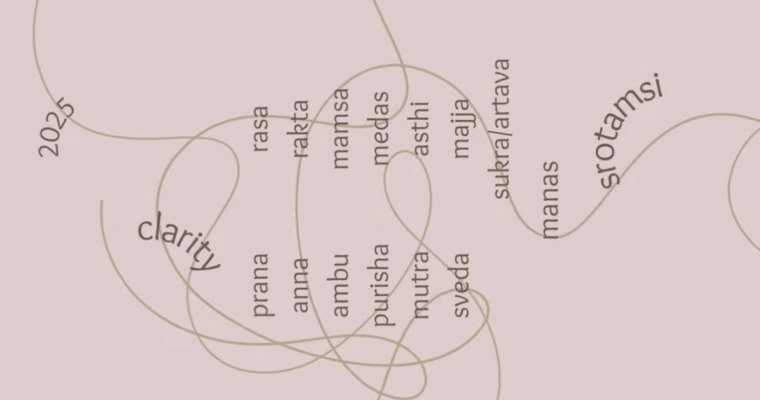
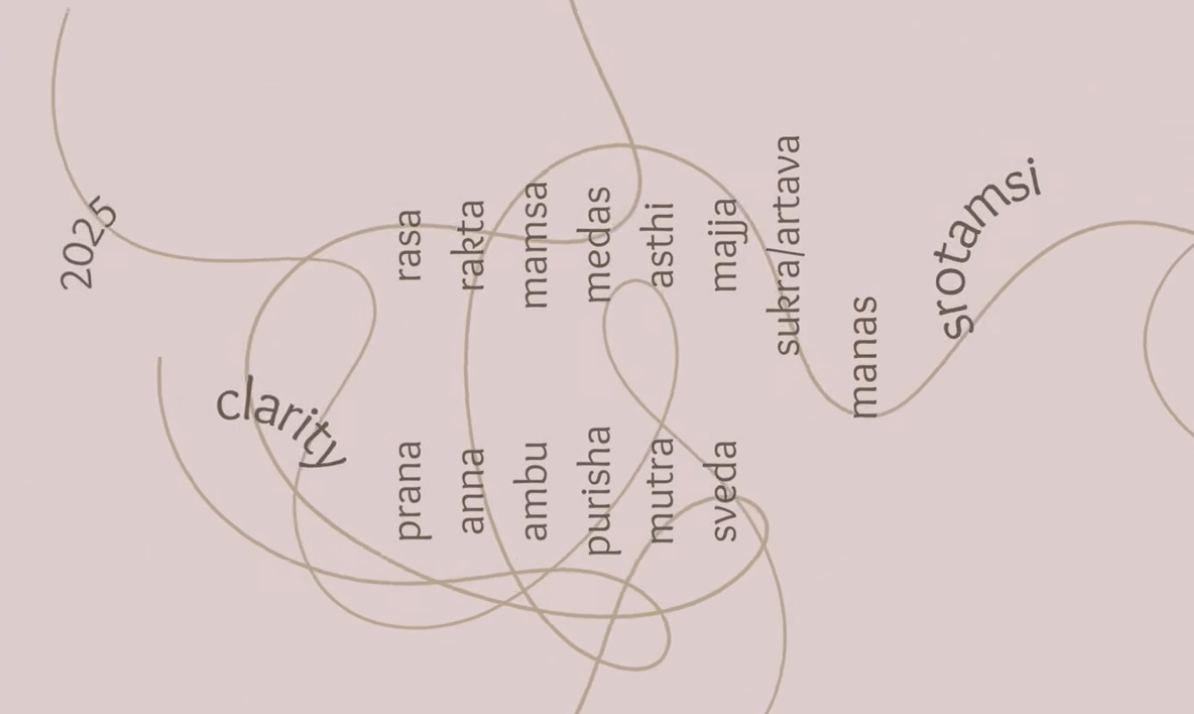
While fire moves pretty fast, especially the kind of mental fire that leaves us convinced and decided upon something at the drop of a dime, the dance fire we have in early spring is nonetheless being performed to the music of a larger, more rhythmic intelligence that knows better than to give us what we want when we want it. Prana (the refined form of vata dosha, bearing qualities of the air and water elements) is keeping time and titrating our exposure to fire to support our long-term interests. This fire isn’t a blaze—it’s a tease, the wink and side smile from across the room that makes your heart flutter and sends a frisson of electricity down your spine. In early spring, we get a very unique combination of all three doshas, all five elements collaborating—sometimes crashing—into each other to give birth to a new cycle of life. The tail winds of vata (and prana) refuse to yield power, creating a buffer of space and circulation as the increasing fire of the sun starts to melt the frozen earth and water. Of these five elements, the most prominent (and troublesome) are the pair that epitomize the notion of frenemies: fire and water. It is because of water that fire serves any useful and health-promoting function in our microcosm and macrocosm. It is because of water that fire has ascended to its high rank in our ecosystem. It is because of water that we know the satisfaction of fire’s transformative powers and aren’t simply scorched in every encounter with it. Which brings us to an exploration of two eliminatory channels of water that we tend to try to hide and even forget about (until you can’t): the mutravaha srotas and svedavaha srotas, or the channels of urine and sweat.
Our culture does not have a healthy relationship with waste products of any kind, biological or material, and yet the ability to eliminate regularly and completely is key to achieving the goal of Ayurveda, longevity. Thirteen non-suppressible urges are named in Ayurveda—physiological actions that, when not allowed to express themselves, aggravate vata and cause disease—which are all some form or another of elimination. As I discussed in last month’s post on the purishavaha srotas (channel of feces), the quality and quantity of our waste products offer us several useful and urgent pieces of information about how to go about our day. Primarily, and especially for the purishavaha srotas, they’re an indicator of our digestive health—what goes in must come out, and when you poop you can see with your own eyes what happened in between. Urine and sweat are also byproducts of our digestion of food (and water), but they’re also tied to subtler aspects of our body-mind metabolism that indirectly influence our digestion of food. Like separating your cardboard from your rigid plastic from your food scraps from your “other” trash, the body has different pathways of elimination based on what’s being filtered out. And while urine and sweat have their own pathways inside and out of the body (duh), they’re both connected to the mysterious yet fascinating dance between primary hormone systems that Maypole dance between the body-mind. These waters are the medium of vital messages—when to feel hungry or tired, when to pull your hand out of a fire, when to ovulate, when to open up the sweat ducts to keep your organs from overheating—that keep you alive. Fire and water together are the divinely intelligent checks-and-balance system that ensures the firestorm of communication needed to keep you alive—and maybe even more than just alive—doesn’t wind up killing you.
Let’s start at the beginning with some basics. The mutravaha srotas is a rather simple plumbing system (way simpler than the plumbing in most houses)—the kidneys filter all of the blood in your body (about 180 liters per day), producing about 1.5 liters (4 anjalis, or handfuls, in Ayurvedic measurements) of urine, which gets stored in the hollow organ of the bladder until it’s full enough to let the waters flow. Urine is 90 to 96 percent water, which is why proper urination is necessary for healthy blood pressure—too much water stored up inside will cause the BP to rise, and make the heart work extra hard. But it also contains other waste products that, if allowed to build up, can create toxicity and throw off the delicate balance of “fiery” substances in the body: urea (waste product of proteins), uric acid (waste product of nitrogen), electrolytes (potassium and phosphorus), as well as the waste products of pharmaceuticals, hormones, vitamins, and minerals that can’t be digested (B vitamins are famous for turning pee bright yellow). The color of urine will tell you whether you’re drinking water enough to flush out those toxins (you want it to be mostly clear); the frequency of your urine can tell you that, too, though the (in)ability to hold your bladder is as much psychological as it is biological. We’ve all probably experienced the “key in door” situation—where after a long trip you might not even realize you have to pee until you’re steps away from the bathroom and all of a sudden the urge is undeniable.
- Function: electrolyte balance, elimination of urine, blood pressure regulation
- Mula (root): kidney, bladder, penis
- Margha (pathway): ureter, bladder, urethra
- Muka (exit): urethral opening
That holding (or not holding) relates to the function of the air element (or vata dosha) in the body, which also links to the emotional function of the kidney-bladder channel. The bladder is even considered one of the “vital” organs in Ayurveda, along with the brain and heart, since it is a main seat of Prana. In the same vein, per Ayurveda and TCM, this organ system is most associated with fear—little kids (and sometimes grown-ups) might wet themselves when they’re scared both awake or asleep. Fear can manifest as anxiety—a desperate desire to know what’s going to happen, a clinging to control in the face of our ultimate un-knowing—but also as states like grudges and jealousy, which are their own kind of holding-on to a way things were or how we thought they should be. No matter the cause of our fear, our bodies respond the same way: by producing a rush of stress hormones (hello, fire) that circulate throughout the body to get us pumped up to fight, flee, or freeze. The body may spontaneously evacuate in a state of acute stress or trauma, but over time chronic low-level stress will create a state of confusion about when it’s safe to let go or not. In a parallel way, a common reason for suppressing the urge to pee is just being stressed—you’re at work and can’t leave your desk, you have a long commute and can’t stop, you have a baby or toddler who won’t let you take thirty seconds alone in the bathroom. Waiting until it’s absolutely necessary to pee (for any reason) then creates its own kind of panic, with layers of fear or embarrassment that you can’t even control your own body…and so the widening gyre spins.
Metabolic imbalances, notoriously diabetes, manifest themselves in the urine as such. When the body is no longer able to metabolize sugar properly, the extra gets dumped out into the urine, creating the trademark sweet smell (in the Ayurvedic texts, a test for diabetes is to leave urine outside to see if ants are attracted to it; maybe faster than the time it takes to get lab results back these days). Diabetes is largely considered a kapha disorder (especially in its initial stages), implicating shenanigans with the water and earth elements. But zoom out, and you’ll see vata—and its shadow, fear—close by. Might someone be overeating typical “comfort foods,” carbs and sugars, because they’re scared at some level? Because they feel sad or alone or uncertain or overwhelmed and just want to be enveloped by an easy, soft, heavy bread/muffin/chocolate cake/ice cream-blanket? Carb-loading to fulfill an emotional need but then never really using those carbs as energy to fight, flee, or freeze is what sets someone up for diabetes; and when that emotional state persists, the blood stays saturated with glucose on the off chance that the tiger will really come back this time, using the urine as a pathway of elimination.
A similar water-holding-fire situation arises with a common imbalance of the mutravaha srotas: urinary tract infections. While more common in women, they can occur in any body and come with a set of trademark pitta symptoms—itching, burning, and odor. Usually, this is because some bacteria has decided to set up shop in the urethra. But it’s also common to have these symptoms and get a negative culture back from the doctor, meaning there’s no abnormal bacteria. What gives? These symptoms could just be the body’s attempt to rid itself of excess pitta, and the urinary tract (which is pretty close to the home of pitta, in the torso) is the closest exit. UTIs can arise from many causes, but often there is an element of pitta involved even when bacteria is present—doing a lot of sweaty exercise, a pitta-aggravating diet or lifestyle, etc.
Discomfort while peeing isn’t the only thing at stake when the mutravaha srotas goes awry. This channel is the origin and storehouse of our supply of precious energy we need for vitality and immunity throughout our lives. In TCM, this substance is called jing, our vital essence—a substance we’re born with in a fixed amount and slowly lose over time due to aging, or, an at accelerated rate when we’re frequently stressed or sick. An overactive or dribbly bladder is known as a “leaky jing gate,” common among older men especially and often accompanied by weakness in the knees (kidney yang deficiency), since the meridian of the bladder runs along the back of the legs. The Ayurvedic correlative of jing is ojas, which is described as a golden, unctuous elixir that lives in the heart and also circulates around the body in a lesser form. We are born with a certain amount of ojas in the heart (eight drops to be precise), but we also make ojas regularly as a byproduct (you might even call it a “waste” product) of digestion. Ojas is a beautiful substance I’ve waxed poetic about before—but here I’ll channel my realistic friend Wallace Stevens and say it’s an “elixir” of health that bestows radiance, endurance, and resilience against stress of all kinds. If digestion is constantly being interrupted by fear (or other such emotions that stimulate the stress response; we simply don’t process food well when our body is in fight/flight/or freeze), or a biochemical “fear” caused by illness and weakened immunity (aka inflammation), then our quality and quantity of ojas will decrease. Since the kidneys control the heart, it’s not a stretch to make this connection between seemingly disparate organ system. Losing jing or ojas is often a sign of aging—or, more precisely, approaching death, since the deficit isn’t time-bound. The body loses its ability to maintain a proper hormone and electrolyte balance through the circulating waters, and our delicate ecosystem falls apart. The fires that helped maintain the system lose their checks and balances, and so the fire of our spirit has no choice but to vacate.
The svedavaha srotas, or channel of sweat, is not that different in its function or causes for imbalance; it just happens in a different part of the body. In fact, the two systems often work together when eliminatory pathways get blocked or confused. Designed to avoid an overflow of toxins at all costs, the body will pass off what’s not coming out of one hole into the closest neighbor. Like urine, sweat is mostly water (about 99 percent), with the last bit comprising sodium chloride (salt) and trace minerals such as calcium, magnesium, copper, zinc, iron, and other proteins. Sweating happens when the internal temperature of the body gets too high, which is a threat to your homeostasis. Salty sweat is extra hot, since salt is the hottest flavor (rasa) as described by Ayurveda.
Made of fire and water, salt carries and holds heat, whereas the pungent (spicy) taste is made of fire and air, which is more fleeting in its intensity. Think: what do you put on ice to melt it—salt or cayenne pepper? What happens when you drink water after eating a bit scoop of jalapeno salsa? The water will hold the fire inside your mouth (and skin), which is why it’s better to have milk or bread (something denser).
At the same time, your body needs a certain amount of salt to function, so the svedavaha srotas can also reabsorb salt if you’re sweating too much.
They say you can’t step in the same river twice, and similarly not all sweat is created equal. The sweat you produce when you’re working out or at the beach with no umbrella is more watery, and generally produced all over the body (via the eccrine glands). There’s also “stress sweat,” which only appears in certain parts of the body tied to the nervous system: the forehead, hands, feet, groin, and armpits. This sweat, produced by apocrine glands, tends to be thicker and oilier since it contains more fat, protein, sugar, ammonia. It also tends to have an odor—there’s that pitta again, since it’s full of stress hormones—and can create the dreaded yellow pit stains on your white shirts. Folks with diabetes or ama (metabolic waste, with signs of indigestion) will have smelly sweat, too, since “stress” is kind of always circulating through their system and looking for a way out. Sweating is even a form of Ayurvedic therapy in these and other similar diseases, where it helps to push out excess and vitiated pitta and kapha. It’s worth pointing out that sweat isn’t smelly on its own, in reality—it’s the bacteria in the sweaty regions that have an imbalance, and their waste products are causing the odor.
- Function: water regulation, perspiration, elimination of liquid waste, body temperature regulation, lubrication
- Mula (root): medas dhatu (fat), hair follicles (pores and sweat glands)
- Margha (pathway): sebaceous ducts
- Mukha (exit): pores, sebaceous duct openings
At a basic level, sweat is the body’s natural air conditioning (though as I felt that day in college, and all of my fourteen summers living in NYC, sweating does NOT substitute for a/c). We sweat more in the summer because the external heat competes with our (pretty toasty) baseline of 97-98 degrees, so the waterworks start to maintain homeostasis. When we sweat because we’re nervous or angry, the internal thermostat gets turned up by aroused hormones and the body tries to compensate with a release; similarly with exercise, though the rise in temperature is just from all of your muscle fibers firing and making friction, your heart pumping to keep up with oxygen demands, etc. In all of these cases and more, we’re working with the main threat to our health per Ayurveda—fever, known as jwara. The clinical Ayurvedic texts devote more pages to jwara than any other disease because it is, really, the only disease. An increase of internal temperature can happen on a systemic level—like when you have the flu, and all of the immune troops in the body are called into action to help—or on a local level—like when you sprain your ankle and the joint gets red and swollen while immune-cell-containing lymph cells (fire in water) rush in to protect the injury and start the repair process.
While sometimes the fire of an imbalance is obvious, other times it’s so deep—or we’re so distracted—that we don’t notice its slow build. The few extra drinks because we’re stressed from work and “deserve” it. The few extra coffees because we need to make that deadline. The fewer hours of sleep or whole-food meals because we don’t have time. After we don’t have time to take care of ourselves for long enough, the body makes you make time. You “catch” some virus that lays you up in bed with a fever that you can’t quite kick, or your coordination is a little lagging from fatigue so you hurt yourself doing something seemingly simple, like walking or picking up a heavy bag. (I’ve experienced both of these scenarios, more times than I’m proud of.) In these cases, yes, there are some external causes contributing to the jwara, but at the root is a displaced fire. We get so caught up in our ego, our striving that we burn through the protective stores of jing/ojas.
Compare the “dewy” glow of a healthy complexion with the sallow, slimy complexion of someone who’s sick. The waters our pores produce reflect what’s being metabolized—or not—inside.
Indeed, the svedavaha srotas is crucial to maintaining our most important immune barrier in the skin. With its own microbiome (separate, but connected to, the famous gut microbiome), the skin is our first line of defense between the outside world and inside. The role of sveda is described in Ayurveda as “softening” the skin—the oily humectants of sweat creating a kind of protective, lubricating layer that makes the barrier supple, not rigid. Skin that sweats easily will more readily flush away toxins and invaders on the surface, and be better equipped to keep unwanted krimi (the Ayurvedic word for all sorts of ickies, like viruses and bacteria) out. Stress sweat is a way that the body puts itself in defense mode—whether you need to defend yourself from a bear or a client you’re giving a presentation to at work, the mind senses that there is a threat to the integrity of you. It’s hard to suppress sweat by will alone, but we clever humans have made products to hide our stress and fear that oozes out through our pores at the LCM (least convenient moment): anti-perspirants. Laden with cancer-causing chemicals, these “hygiene” products not only give us more unnecessary exposure to toxins (which our sweat is trying to eliminate), but interfere with a biological process that’s trying to maintain our body temperature. Where will all that un-sweated-out heat go, you wonder? Your smelly, non-UTI urine. Your loose, urgent poops. Your rage. Your mysterious rash.
Attend to the skin
As a subtle boundary
Containing vastness.
—Radiance Sutras, 25
Even outside of acute illness or stressors, sweat will indicate some imbalance between the water and fire channels of the body. A woman’s perimenopausal hot flashes demonstrate the TCM disharmony of “deficient yin”—where there is not enough heaviness (water and earth, in the form of estrogen) to regulate and contain the hormonal fires, and the body’s thermostat gets out of whack. Inappropriate sweating—where the body is constantly damp, or night sweats when you have a fever—happens when the pores lose their ability to stay closed, so the waters just leak out (kind of like dribbling pee). In this context, we can call in the meridian of the Triple Warmer (which is paired with the Small Intestine and Heart/Pericardium). It’s not a direct corollary to any srotamsi, but it serves an important harmonizing role for the circulation of fire throughout the body. The TW is tied to the immune system and the stress response, aligning it with the adrenal glands (which live on top of the kidneys, where mutravaha srotas passes through). It’s also been connected to the fascial network, which while more overtly connected to kinetic movement plays an important role in fluid metabolism and the stress response via proprioception. Fascia is what alerts the nervous system to unknowns or instability in our environment—take a walk on some black ice and you’ll have no doubt that your ENTIRE body is responding to your feet’s perception that things are not okay down here. Living your life as if you’re walking on black ice, terrified to take a misstep or god forbid fall down, and the TW can become overactive, then strained to the point of giving up. When the world outside makes it no longer safe to be in your body, it’s only natural that we start to sweat.
Or, we choose to sweat on purpose, and we run.
Spring is not my favorite season. While dry, cold winter can take a toll on my body, the unevenness and too-muchness of spring is another kind of stressor that I don’t handle well. My own circulatory system pulses to the beat of an erratic drum, so the rise in the water element can make for all forms of discomfort physical and emotional. While not explicitly connected to urine or sweat, the liver and its role in excretion of wastes is suitably the chief organ of the spring per TCM. Its job, along with the 500+ physiological roles it performs all day every day, is to circulate emotions—hence its moniker “the free and easy wanderer.” A stagnant liver will produce feelings of frustration and anger—the kind of “spring fever” many of us are familiar with. A fever that makes us want to start again; that makes us want to open the windows and feel the cool breeze on our skin; that makes us want to make space for our hearts to grow up and out and be gazed upon by the sun—the sun that has been gone for oh so long.
Despite my cranky liver, though, I’m finding myself turning more and more towards the light this spring. Each day’s earlier sunrise and later sunset feels like a gift that my spirit not only wants, but needs. Remember that the TW meridian connects to the heart, an organ in TCM that doesn’t just pump blood, but houses our spirit (or shen). The heart is the fire element no matter whom you ask, and right now the heart of our collective body feels under attack (and maybe has been for a while). In this state of fear, it’s tempting—innate—do what we can to protect the heart. While sometimes we recommend incorporating astringent (drying) foods and practices to balance the rising waters of spring—things like honey and ginger—this year I need a more nuanced approach. I need to keep the waters, which carry the fire I need to hold onto faith in our world, flowing. The channels of elimination need to feel safe enough to open and release the waters that contain my fear, even while I prioritize drinking in water—literal hydration, but also emotions and social connections—that rehydrate my cells with love.
These elements are also shoring up my spiritual guardrails, as represented by the three main energy channels of the subtle body. The grounding of ida nadi (tamas/lunar, on the left side of the spine) plus the stimulation of the pingala nadi (rajas/solar, on the right side of the spine), usher the pure light of the fire of shushumna nadi (sattva/oneness, the central channel that opens to the divine at the crown of the head). That central fire has a physical expression in Ayurveda, known as sadhaka pitta. Moving between the heart and the brain, sadhaka pitta endows us with passion and righteous motivation to fulfill our dharma. But while most fires bring our eyes upward, this fire invites the head (brain) to bow down to the wisdom and light of the heart. And of the body, which produces the waters that will carry, buffer, and move out the intensity of shushumna as we put its divine inspiration into action.
The duality of spring orients our vision and energy in the same way. While we crane upward toward the increasing light, that posture is in service of a funneling of energy down to our roots. The warming sun above acts on the earth to melt any frozen or stagnant water so it can irrigate the land below and give rise to new life. Down and up, heavy and light, warm and cool—a divine play that, when observed with curiosity, can be dizzying in the best of ways. What prevents the shake-up of spring from throwing us off the merry-go-round is maintaining connection to our center of gravity—or, center of levity—in the heart.
This month’s practices will explore these dynamics through a combination of “heart-opening” poses—backbends, twists, and balance work, all done with an emphasis on rhythm and circulation. It’s common in modern yoga classes to feel disconnected from the heart-center when trying to keep up with a fast-paced class. While my classes this month will play with tempo, we’ll also notice what actually makes us sweat—in a satisfying way. Is it losing yourself, or holding on? Is it moving to the edges or coming back home? Is it running away from what you’re afraid of, or toward what your heart wants?
When I think back on that day in college, I like to believe that my impulse to run off my sweat—meeting fire with fire—wasn’t purely motivated by discomfort and frustration, a stagnant liver and rajas. My body was just at the starting line of a deep healing process, and I didn’t yet trust my instincts not not be distorted. But what I felt when I got back to my dorm room (still hot and muggy) was an indication that my body knew what it was doing, and my brain was humble (or melted) enough to listen to the waters coursing inside and out of it. Although I hadn’t consciously thought about it while softening my gaze to take in the glistening river, the entry point into my poetry essay appeared clear as day when I sat back down at my desk. I wrote gleefully, even a bit mischievously while I imagined the poet, who famously eschewed symbolism, scoffing at my interpretations of his work. (Sorry, Wallace; I still got an A.) Having remembered my passion, my purpose, completing the assignment was, “how you say?, ‘no sweat.’”
We can sweat out of fear and desperation, where the body’s desire to hold on and release simultaneously creates an inner conflict of inflammation, fermentation, and stagnation preventing the wisdom of the heart to rise up and clear the air. Or, we can sweat out of love, where the waters we move and release are in service of maintenance, softening, and growing.
We can sweat because we’re afraid of the edge, or when we meet our edge and cross it on purpose. We can sweat because we don’t want to die, or we can sweat to live.