Arjuna, I am the taste of pure water and the
radiance of the sun and moon. I am the sacred word
and the sound heard in air, and the courage of
human beings. I am the sweet fragrance in the Earth
and the radiance of fire; I am the life in every
creature and the striving of the spiritual aspirant.
My eternal seed, Arjuna, is to be found in every
creature. I am the power of discrimination in those
who are intelligent, and the glory of the noble.
In those who are strong, I am strength, free from
passion and selfish attachment. I am desire itself, if
that desire is in harmony with the purpose of life.
—The Bhagavad Gita, 7.8-11
“I will never be satisfied.” —Alexander Hamilton

When I was applying to colleges, I spent hours googling “English major + jobs.” I had an unwavering passion for literature, so the path for my studies was never in doubt. And though my parents were never the type to force a future on me—they’ve never questioned my career choices, not even when I graduated from an Ivy-league university and took a job that paid less than $45k a year, and not even when I quit that job to become a yoga teacher—I still felt I had to justify (to whom? Myself? God?) my academic path. After many weeks of searching, and tweaking my search terms to make sure I’d covered all my bases, I couldn’t ignore the obvious destination that was waiting for me on the other side of college: publishing. It was almost too perfect. The job of editor seemed made for people like me—quiet, deep thinkers, word tinkerers (I even did it with Google!), immersive and expansive imaginations but stilting and awkward IRL.
As luck would have it, and despite some tempting deviations, I followed the path of those initial Google searches and landed a dream first job. Many of my expectations proved true and satisfying: I spent many hours reading and writing about what I read. But I soon discovered another whole list of skills required for being an editor that neither Google nor the job description I applied for and got mentioned. There was math (!)—though mostly fake math as we totally guessed how many books would sell and threw fake money at those books with a hope and prayer. There was politics—I’d actively refused to join debate and Model UN in high school because 1) my mind was so easily changed that I could often see both sides of an issue and agree completely; and 2) when I could make up my mind, I hated having it changed, so why would I impose that on others? In books, we had to play politics all the time, in-house and out-of-house, using flattery and bribery (we’ll let you pick the title, we’ll give you the best cover, the best IG ads…) to win acquisitions (with more fake money). Last, and maybe worst, there was socializing. I loved reading because I could be alone with other people at the same time and not have to talk spontaneously. I loved writing because I could take time figuring out what I wanted to say, then edit it so it was smooth and precise. So when it was expected that I schmooze with agents and pre-influencer-types, I started to doubt whether I was suited for the job at all.
One of the worst facets of the socializing part of my job was attending book readings. I liked supporting my authors, and even the subtle art of poaching authors whom I admired, but the Q&A portions would make my heart cringe. Inevitably, someone in the audience would ask “what’s your process?” Please, tell me what’s happening when you write so I can replicate the process and produce something not only as good as what you made, but better. I’d watch for the twitch in the author’s face as they tried to contain their cringe and describe what happened while they created a whole world made of words. What gives, people? Are you really expecting an answer? And even if there was a replicable “process,” wouldn’t you want to make things your own way?
Offended as I was by watching my writers deflect this question with polite enthusiasm and a list of favorite notebooks and pens and coffee rituals (most of the time the questioner was a budding writer who just wanted a leg-up, so #empathy), I resisted any kind of process once I forayed onto the other side of the writing table. Except, of course I have a process. We all do. The annoying and hard thing about putting it into words is that the process isn’t really what makes writing happen. It’s an elaborate dance that gives the brain just enough stabilizing distraction to allow the thing you’re making to flow. Or to light the spark. Or to have life breathed into it by a rustle of wind. (All the elements work here in my metaphor.) It’s like sleep. You might have a process of getting yourself ready and into bed, but then sleep just happens. And you only know it’s happened when you wake up and it’s done.
No new writer wants to hear that, but I’m glad I endured those painful social interactions to learn the lesson. Because when you finally concede to the non-process that allows for creation, it feels really good. I always look forward to the dance around writing this newsletter. For the curious my process looks like this:
- I decide on the herbs and yoga practice that support the srotas I’m teaching for the month; research and type up the relevant details and sources.
- I gather notes about the srotas from my old notebooks and source texts. These are the bones of the piece—the factual details that I, as a teacher, want you to know.
- After that, it goes all mushy and outside of numbered lists and timelines. I put the name of the srotas (or whatever the topic is) in my brain. I go about my life. I take walks. I read stuff—Ayurveda and fiction and the news. I repeat the ideas to myself before going to sleep. I pepper the facts of the srotas into my yoga classes to see what comes out of my mouth while cueing poses and guiding savasana. My ears and eyes and psoas are turned on all the while waiting for it. The satisfying sign of rightness. And somewhere along the way, it happens. The dry, dead bones of my notes receive their fleshy coverings, are infused with the pranic breath, of story. The material comes to life.
It’s beyond satisfying to be part of this process, and then try to keep up with the developing body of writing, words and sentences replicating at the pace of a growing embryo. When I set out to write this piece on the rasavaha srotas, I was especially excited to see what story would be born from it. Rasa has a special place in my own healing narrative, and I feel a special responsibility to do it justice when I teach. So I did all the usual things: made my outlines, took my walks, planted the seeds in my subconscious so they could do their growing in the dark. But after days, there was nothing. The bones stayed dry and lifeless. What gives? Had the process broken? Had I broken?
Of course not. The more I sat with it, listening and sensing for the happening, the more I realized that the lack of happening around rasa IS the story. Or, at least the beginning of it.
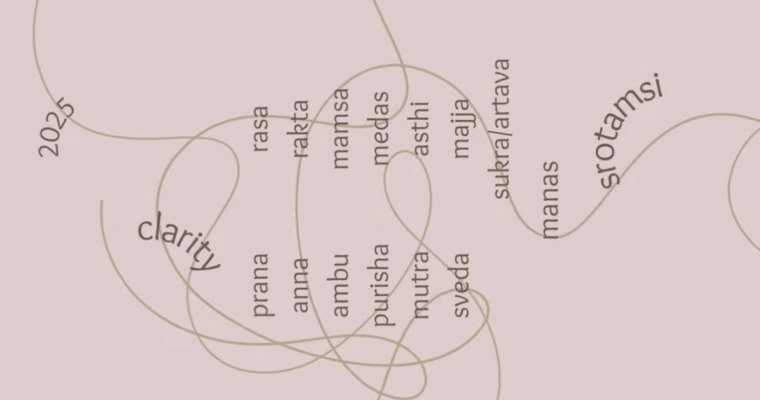
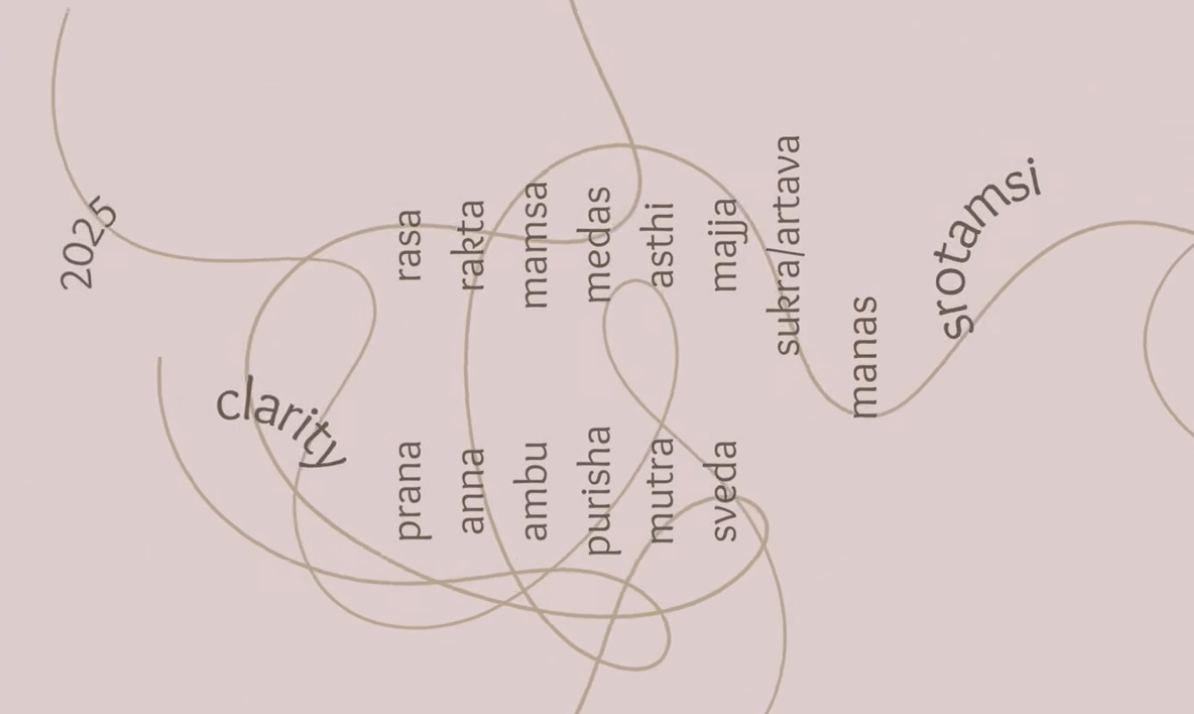
The channel of rasa (rasavaha strotas) brings us to a new chapter in our year-long srotamsi story. Thus far, we’ve explored the channels of ingestion and elimination. Super important to the creation and maintenance of our body-minds. So important that you could spend a whole life just managing those srotamsi (especially pranavaha srotas) and do a lot of good work. But inputs and outputs don’t make a life. You don’t get on a train just to get off at another station, and promptly get back on again (although sometimes my life feels that way). Normally, it’s nice to pause and stay a while. See what’s happening in this new place, then when you’re ready go back home (or not!). Life happens once the comings and goings fall into a rhythm and the energy of movement senses its own arrival. It’s mature enough to know it’s arrived where it belongs, where it can do its best work. There, it stabilizes itself AND becomes a stabilizing force for the whole system.
Entering, exiting, arriving, belonging: This is the story of the dhatus, or tissues. In modern medicine and biology, the word “tissue” has a specific connotation that is narrower than the Ayurvedic meaning. When I hear “tissue,” I think of flaps—skin, muscle, fat, etc., substances that can be filleted off of a cadaver and diagramed. Dhatus are anything but that—they’re integrated, living structures that cooperate in a dynamic ecosystem that is your body—and your life. In fact, as we’ll explore later and throughout the rest of the year, a dhatu is what happens when a dosha is on its best behavior. Rather than causing constricting/inflammatory/stagnating mischief (the basic effects of vata, pitta, and kapha imbalances, respectively), dhatus put the qualities of the doshas to use in a way that promotes and maintains life. They’re what happens when we have faith in the process of inputs and outputs, practice that process regularly, and sit back in amazement because somehow the juicy bits arrived, fully formed, again.
Rasa is the first in the list of seven dhatus (I like to add a plus one, but I won’t spoil the ending for you) that make the story of the body a happening.
- Rasa (lymph)
- Rakta (blood)
- Mamsa (muscle)
- Medas (adipose)
- Asthi (bone)
- Majja (nervous tissue/bone marrow)
- Shukra/Artava (reproductive tissue, male/female)
As with any list in Vedic texts, the first item is always most important, which is why I wanted this piece to be extra special. It’s also a kind of encapsulation of everything to come, which makes those endless lists seem a little more manageable. The beginning of the story IS the whole story. When we know rasa—the first dhatu to know itself, to emerge from an alchemical process of recognition and listening that is digestion—we know the whole story of the dhatus. So let’s begin.
Like many Sanskrit words, the word rasa has several meanings with discrete contexts that also, conveniently, speak to one another. In the biological context of discussing rasa dhatu, and its corresponding channel rasavaha srotas, the simplest meaning is “lymph”—the fluid that circulates throughout the body as a carrier of immune cells and as a receptacle for dead and decayed cells that need to be recycled. But rasa is actually more than lymph—it’s all of the liquids in the body, including things like intracellular fluid and mucous membranes. (Remember how dhatus are well-behaved doshas? Rasa is kapha all dressed up for church on Easter Sunday.) Because it’s needed basically everywhere in the body at all times, rasa is the most abundant of the dhatus and requires special attention (along with blood) because it touches every part of the body.
Similar to the mula (root), marga (path), and mukha (exit) of a srotas, when discussing any dhatu, there are a few structural pieces that help us understand the facts of its existence. These are its function, byproduct (upadhatu), and waste product (mala). The interplay of these phases of dhatu formation is key to understanding their combined form-function in the body. For rasa dhatu, these aspects also illuminate why rasa is a representative for the entire dhatu system:
- Function: nutrition (prinanam)
- Upadhatus: breast milk (stanya), menstrual blood (artava)
- Mala: poshaka (unrefined) kapha
From start to finish, the story of rasa is about nourishment. Its creation depends upon those comings and goings, the inputs of fuel and outputs of elimination, that we’ve been talking about so far this year. But the kind of nourishment that rasa provides isn’t the same as food (anna/ahara). It’s the nourishment that sticks to the bones (literally). It’s the nourishment that makes our life a happening. Rasa allows us to experience the other definitions of rasa: juice, sap, flavor, and emotion. It’s the beginning of a becoming.
Few beginnings are absolute, and in the case of rasa we will better understand its story once we rewind to understand the process of nutrition it both starts and embodies—how ordinary food that lives outside of us becomes something our bodies integrate and assimilate.
I’m not a nutritionist or a biologist, so I won’t attempt to summarize how modern science explains “good nutrition.” I’d guess that it involves those beautiful and intricate molecular drawings, mathy chemistry equations, and a lot of holes (given that there is no consensus or scientific research supporting any one “diet”).
Ayurveda, on the other hand, is very clear about what happens when food (ahara) enters the system. It follows one of three laws as it goes from a not-you being to a part-of-you dhatu.
Ksira Dadhi Nyaya—The Law of Transformation
This describes how a piece of food transforms into more and more refined versions of itself, the way milk can be cooked and cultured to make yogurt, then churned into butter, then cooked into ghee. It’s how rasa becomes itself and its byproducts.
Kedara Kulya Nyaya—The Law of Transmission
This describes how a piece of food will move sequentially through the system, each dhatu taking a bit of nutrition then sending what’s left to the next layer. It’s similar to irrigating a field with water; the water starts flowing at the spigot and then spreads out to the edge of the field (if there’s enough to get there, of course).
Khale Kapota Nyaya—The Law of Selection
Like pigeons (kapota) that select grains (khale) from a pile, the dhatus might select certain components of food that serve them most. A classic example is protein, which muscles will gobble up first in order to build themselves.
All three of these processes are happening simultaneously, which allows for the body to maintain a regular rhythm of repair and growth. E.g., just because muscle is number 3 on the list, it might need more attention after you do a workout (fuel + repair and elimination of the damaged cells) and can’t necessarily wait to be fed after rasa and rakta.
We see the simultaneity of these laws playing out when we break down how the individual dhatus are formed and then inform each others’ creation and health. As I mentioned above, the dhatus go through a life cycle of maturation, producing more and less refined versions of themselves as they interact with agni:

This process continues through all seven dhatu layers, with the final product (that plus-one I mentioned earlier) being ojas—the most refined essence of our food, and of our Selves, which acts as an immune elixir for body, mind, and spirit. Each level of dhatu formation and digestion takes about five days, meaning that whatever you eat for breakfast today won’t become fully integrated into your system for a little over a month. Hence when we make changes to diet and lifestyle in Ayurveda, we wait to see signs of change in about 4 to 6 weeks’ time. Anything earlier, and the new food/activity/medicine won’t have had a chance to be fully digested by all of the dhatus.
It’s important to note that the upadhatus and malas aren’t just throwaways to be ignored and eliminated. The upadhatus especially provide a specific function in our health that are related to, but just different from, the main dhatu—they’re sthayi, or stable, after all. Note that in the case of rasa, the updhadtus are quite overt expressions of nourishment. Adequate nutrition and overall tissue is what allows a woman to menstruate—to build the field needed to hold onto and nourish a new life. And once the baby is born, breast milk takes over nourishment (and menstruation usually doesn’t come back until that upadhatu has done its job). The watery rasa that encapsulates a baby in utero offers its own kind of prinanam—food for its rapidly growing body and protection for its mind. Imagine swimming in the ocean—when you dive under the water, immersed in rasa, the intense sun and cacophony of even the most crowded beach dulls and softens. A baby starts its life in this state. No wonder it screams upon being forcefully pushed out of its rasa-bubble. That first cry isn’t only a first breath, it’s a sensory overload—it’s so bright and loud and when can I go back inside please please please!
Even waste products serve a function in the process of accumulation, before they make their way out of the body. I wrote a little about this in the piece on purishavaha srotas, or the channel of feces—wherein our poop, when hanging out inside the colon waiting to be eliminated, provides a stabilizing quality to the body. It fills in a great big space. This is one reason why when there is excess vata in the system, we might become constipated—there’s already more space and air than the body likes, so it holds onto feces (even though it’s a waste product) in order to not create more empty space.
Since rasa is the first of the tissues, it is most readily affected by diet and by digestion. Rasa is the very first stage of refinement, transforming a heap of random carbohydrates, fats, and proteins, of amino acids and vitamins and minerals, into a story—into the happening of the person who ingested it. If you have too many salty taco chips at a summer barbecue, for instance, you might wake up the next day a little puffy—rasa is vitiated by the salt. If you do this every day for a while, your rasa might change in quality more long-term—swelling that doesn’t go away, or a sluggish agni. But because of the dhatus’ interconnectedness, vitiation of one will affect the others. Salty, sluggish rasa becomes the building blocks for rakta, then mamsa, then medas, and on and on.
While vitiation can happen anywhere along the dhatu flow chart, we always have to examine rasa as the entry point into the story of imbalance. Was it an issue of transformation—the milk started out okay, but the yogurt went funny and so the ghee was sour? Was it an issue of irrigation—just not enough water to get to the edge of the field, or maybe some pesticides were sprayed that affected only the back half? Was it an issue of selection—the pigeon thought a piece of grain was a nice seed but it was really a rock, or some bossy pigeons took all the good grains before dhatus six and seven could get a chance? Or, did the issues start even before rasa—the beginning before the beginning?
Before we can have ahara rasa, rasa, or the nutritive process behind any dhatu, we have agni. The form and function of agni, or our digestive fire, is the ur-process that makes all these happenings happen. In essence, making sure agni is happy is the first and only practice of all of Ayurveda (and yoga). Indeed, Ayurvedic teachings address digestion from every which way—supporting digestion through routines and medicines, choosing foods that will support the body with proper and digestible nutrition, supporting the mind to ensure the proper conditions for complete digestion. Since there’s so much to say on this topic, and we’ll be revisiting it throughout the year, I’ll focus on/review the basics now.
Without agni none of this would be possible. In the Vedic texts, agni is the literal beginning of the story—the first word (after OM) of the first line of the first text (the Rg Veda). When it comes to the story of rasa, ingredients that go into a cold oven do not yield food, let alone tissues. They simply sit there—a heap of molecules without the instructions to transform and become something else, namely, you and your dhatus.
When agni is happy, it keeps the dhatu flow chart humming along nicely. The milk doesn’t curdle, the field doesn’t dry up, and the pigeons share. We probably don’t even notice the body that much, since we can just go about our business and things work and feel good. This is the goal: sama (balanced) dosha, sama agni, sama dhatu, etc., so goes the Ayurvedic definition of health.
When agni isn’t happy, we start to feel things—i.e., the dhatus start behaving more like doshas.
- If agni is too high (tiksna agni), we might burn up our ahara rasa (or any of the dhatus along the way) too fast. The dhatu produced is less in quantity (maybe not enough to be sthayi in that dhatu, and likely not enough to move forward), or inflamed (like a burnt piece of toast—edible but not so pleasurable). This looks like pitta imbalances—diarrhea, intense hunger, reflux, etc. The person eats a ton, but nothing sticks so they’re irritable and tired and never satisfied.
- If angi is too low (manda agni), we might produce undercooked ahara rasa. The dhatus formed might be excess in quality (e.g., when you don’t cook rice long enough and there’s water still left in the pot); or they aren’t sufficiently matured and can’t do their job well at the sthayi level or share with the next dhatu (e.g., when you don’t bake a cake long enough and it’s still moist in the middle; no amount of re-heating will make it worth bringing to a party). This looks like kapha imbalance—heaviness in the gut, low appetite, excess saliva. Always accumulating, but still not satisfied.
- If agni is variable (vishama agni), we might produce uneven ahara rasa and dhatus. Some days the rice is perfect—fluffy and fragrant—and sometimes it’s gloopy; some days we feel great and energized, and some days we’re sluggish and can’t poop. The health of the dhatus is generally poor, since they’re not being fed consistently with high-quality food. This looks like vata imbalance—irregular appetite, difficulty maintaining healthy weight, and general dryness. Tired of trying all the things and nothing working.
- If any of these states continues for a while, ama will ensue—metabolic waste that creates indigestion and, if left unchecked, other imbalances throughout the body. Ama circulates easily in rasa, which is why generaled body aches is one of the trademark signs.
In my skeletal outline of this year’s curriculum, I wanted to be talking about rasa in May/late spring because the whole story—the beginning, and the beginning of the beginning—starts to unfold about now. In our macrocosm, we have a rare window of time when agni and rasa, fire and water, work together in a really steady way. We’re out of that initial melting period, which can feel so overwhelming at the start of spring; and we’re not yet in the height of summer, when our internal agni diminishes and we need lots of rasa (water, coconut water, swimming) just to not be burned to a crisp. The fluid aspect of our body might be flowing in a satisfying way thanks to the steady and increasing sunlight post-equinox (which also has woken up the plants to get their dhatus forming via pollen—sorry allergy people, your fluids aren’t so happy yet!).
In theory, this time of year embodies the qualities of a balanced rasa dhatu (rasa sara): a person with smooth and radiant skin and lustrous hair; a person who is generally happy, intellectual, and enthusiastic; a person who has stamina and faith.
As I’ve been teaching and talking with people this spring, though, it’s clear that something’s awry in the flow chart. Yes, we’re happy it’s not cold and dark anymore. But we’re not radiant; we’re not sthayi; we’re not experiencing the function—prinanam/nourishment—of rasa. I don’t often comment on world events, but no matter what your views are, I think we can all agree that there’s a lot of instability and unknowns that is giving this spring a distinctly vata flavor. It’s hard, even for me, to have faith in and discipline around my processes; and the happenings are not happening as a result. Uncharacteristically, I’ve been unmotivated, dragging my feet on book two, doubtful of the value of my efforts and offerings. I show up, but I feel like a heap of stuff, not an integrated Self. Whether you’re following the news or avoiding it like the plague, every day the question on everyone’s mind is what’s happening? As in, what’s happening today…but also what’s happening—period.
When my process for writing about rasa produced nothing, I was first dismayed—more proof that I was dried up, everything was awful, and no one would notice if I just stopped adding more stuff, more words, to the heap of distractions and things we can’t change or control in life right now. But then, I remembered that those same conditions were how I got where I am today. How I became rasa-fied.
Back in Ayurveda school, I had a teacher who challenged us to find the most “elegant diagnosis” for a person’s imbalance. Most of the time, people show up with complicated stories—doshas and dhatus and malas all out of whack. Synthesizing a whole person into one or two phrases required a lot of concentration—an agni of sorts—to see deep into the root cause. For me, the “elegant diagnosis” that I arrived to Ayurveda with was rasa dhatu ksaya—depletion of rasa dhatu. This affected all my rasas. My body was chronically dry and rough—not enough juice for rasa, its upadhatus, or malas, to do their thing, and definitely not enough to go around for the other dhatus. I didn’t get sick that often, but when I did it would linger due to low immunity; likewise with injuries, which could come on with the slightest misstep and would take seemingly forever to heal. I was vegan at the time, and people would ask me if I ever had cravings for meat or other non-plant foods—nope, not ever. Even now, I rarely have food cravings (though I’ll occasionally realize the craving was there, silent and hidden, when I eat something that unknowingly just hits the spot).
The rasa of my emotions was also dried up. That’s not to say I didn’t have feelings—they usually came through in torrents, followed by drought; and it was all too easy for me to think my way out of emotions, compartmentalizing and restricting to avoid actually feeling. I loved reading books with heightened emotional experiences, especially tragedies, for this reason; I’d feel a swell of something around my throat when a character died or had their heart broken, but then I could close the book or turn that feeling into a probing analytical essay, critical review, or competitive sales sheet. At the same time, I was hypersensitive to physical feelings—loud noises made me jump, bright lights gave me migraines, certain fabrics made me want to scratch my skin off. My joints and nerves could be aggravated so easily. Like that newborn shrieking outside of its rasa-bubble, I didn’t have enough prinanam to cushion the blows of reality.
When I started on a healing path for my physical health, I had gone for so long without adequate quantities and qualities of rasa that I hardly knew what I was missing. So I had to go at it from the top-down—a blind faith in the process of feeding agni and protecting it from big winds (stress, etc.) so that it could start the happening of my body. I read and studied about the foods, herbs, and practices that trusted guides told me would help. For a long time, I was in outline-mode in this creative process. I was walking around (literally and figuratively), senses piqued, waiting for the sign that a happening was near. I’d get excited by even the smallest change, even if it wasn’t really the change I thought it was. Noticing motivated me to keep going, even if I was noticing the wrong thing.
And when the rasa started building, and then flowing, I felt like I’d been body-hacked. On the one hand, my body benefited by that nice layer of protective cushioning. Things that hadn’t worked in over a decade started working again; pains I thought I’d live with forever went away; and I could tolerate the sensory overload of the subway without wanting to crawl into my coat. On the other hand, I was less tolerant of emotions I’d previously thought my way out of. I couldn’t ignore frustration at work anymore and started advocating for myself—to the point of quitting. Treating food as fuel was no longer enough—I needed enjoyment around cooking and eating. I didn’t crave tragic novels anymore—those imaginary characters were suddenly my people, the people I loved who died and broke my heart. The intellectual satisfaction I once derived from reading about them instead stirred too-painful memories. My skillsets were no longer things I could plug into Google and be satisfied by the algorithm output telling me who I should be, who I was. I was a stranger to myself and in the presence of a Self who had been waiting patiently to be strong enough to exist on her own. I recognized her—and couldn’t deny her existence anymore.
Like any good story, there were plot twists along the way. Even what felt like a point of no return—when the heroine walks into the dark forest and you hold your breath thinking, this might be it. After finding myself in the dark forest for too long with nothing to notice, no sparks of motivation, I stopped trying to make it work. I surrendered my vision of how I thought my health and life should be. I abandoned my vigilant searching for and tracking of signs of improvement, and turned my senses toward what felt good now. And that’s when the real story began.
I’ve always loved a good trick ending. When the author circles back to the beginning and unpacks some aspect of the story that had been hidden but humming along the whole time—a detail that makes it all make sense. And so here, as we approach the end of the story of rasa, we have to remember the rasavaha srotas—a simultaneous beginning that, like the story of agni, needs telling if we want to understand what kind of nourishment this dhatu provides.
We’ll start with the facts, as usual:
- Function: Prinanam (nutrition), affection, immunity, faith, regulation of blood pressure and volume
- Mula (root): Heart (right chamber—where the heart receives deoxygenated blood and sends it to the lungs for oxygenation), 10 great vessels (sense organs and eliminatory orifices), rasa channels
- Marga (path): venous and lymphatic systems
- Mukha (exit): arteriole-venous junction
The thing to focus on here is the mula in the heart. You’ll recall that another srotas we’ve studied begins there, too—pranavaha srotas—as well as the one that’s between the lines of the whole srotamsi story—the manovaha srotas, or channel of the mind. In other words, the three main aspects of our Selves—body (rasa), mind (manas), and spirit (prana)—all begin, and come home to, the heart.
With this holistic anatomy in mind, I see that the time I spent rotely nourishing rasa dhatu wasn’t rote at all. The replenishment of the tissue affected the entire channel, which by association affected both prana and manas.
Hence why I noticed that shift in my whole Self when rasa took its rightful place in my organism. In the face of all those new sensations and emotions, I often asked myself, what’s happening? I didn’t know if what I felt was what was supposed to happen, if it was right. And even when I found myself in the dark forest of doubt, the rasa (and manas and prana) were nourished enough to hold onto the faith I needed to keep going. The circulation of nourishment was established now, and there was no going back. I surrendered who I thought I was—who Google told me I was (and I believed to be true!!)—to the needs, desires, and reality of my sentient organism. What was happening? I was happening.
Nourishment of this kind isn’t just physical, that which establishes the individual body’s integrity and function and survival—it’s what lets you know you belong in the larger body of the universe. Just the way that the agni’s job is to recognize the five elements in our food and direct them to the right place to produce rasa and all the other dhatus, the mental, emotional, and spiritual agni recognizes our five-elemental-ness in everything around us. Seeing our sameness, we embody the deepest satisfaction possible: sukha, or good space. We realize that true satisfaction does not require denying another’s—or our own. The sweetest, juiciest layer of life is circulating in all of our hearts and our shared heart.
This is the kind of nourishment we need now. To believe in and practice the process even if we’re not sure where we are, what results we’ll get, or whether they’re the “right” ones. Rasa teaches us to believe in the process that begins with a mere “heap of stuff”—of molecules of food, of notes for a piece of art. Sanskrit has a word for that humble, random beginning: rashi. It happens to be the word used for “constellation”—as in, the star-heaps that make up the Zodiac. As we go through this period of darkness, moving around or trying to avoid heaps of stuff, remember that those heaps are stars. That your stardust flows into the Ultra Rasa of the Milky Way. You never know when the heap will begin to configure itself into a dazzling constellation. It’s probably already begun.