“Legacy. What is a legacy? It’s planting seeds in a garden you never get to see.” —Hamilton
“To plant a garden is to believe in tomorrow.” —Audrey Hepburn
Between walking and the train, I’d usually get to the election of 1800 over the course of a day being out and about. Track 20 of Disc 2 was the beginning of the end, and since we know how this story ends I didn’t feel bad not listening all the way to the very last note. Sometimes I’d drop in in medias res, at the (first?) beginning of the end when Cupid’s arrow flew at him from two directions, with a bit more precision, calculation, and impact than the final blow. I’d go on binging until I remembered all the words again, even if I couldn’t speak them as quickly as the actors. Until I started chair-dancing on said subway, a handful of miles from where he fought and died, and waking up in the morning reciting verses about the Constitution. And then I’d take a break, returning to the real world, the present tense that was a cruel distortion of the ideals that had inspired this work of art—and the country I called home.
Then one day, I had an extra-long commute, and I was sitting on the G train when we rolled past the election onto that hilltop in New Jersey and I listened to the end. The slow-motion whiz of the bullet that struck down a Founding Father in his prime, about to redeem himself in politics, about to heal from heartbreaking tragedy, only to be the subject of his own tragedy. “Every other founding father’s story gets told. Every other founding father gets to grow old,” sang Angelica while even his worst enemies admitted his genius. I thought back to my own relationship to Alexander Hamilton before being introduced to the Broadway musical: neutral is a word for it. Even slightly disdainful, since my history books (and history teacher) leaned their bias toward Thomas Jefferson’s jaunty populism. Who would prioritize banks over farmers? Who would get himself killed in such a silly display of masculine insecurity?
I didn’t expect to feel this affinity to A. Ham. But during the many hours of imprinting my brain with Lin-Manuel Miranda’s lyrics, I felt an odd kinship growing. The one who writes “like you need it to survive,” “like you’re running out of time.” I wondered about his astrological chart, though since his birth date, let alone time, is debated, if not completely unknown, one can only guess the condition of his sixth house of enemies and legal proceedings; his eighth house of scandal and death; his Mercury.
When I got to the end of the soundtrack, though, Hamilton’s ghost sung to me in a different way than what I’d heard while he was making his mark on NYC and the USA. Here was my own father: who didn’t get to grow old, who had no sons, who was preoccupied with his athletic legacy and sacrificed the present for the unknown future of retirement. He, like George Washington advises, had “no control who lives, who dies, who tells your story.” Was I doing enough to keep his story alive? Now I knew why some invisible hand turned off the music before I got to those final tracks. Because sitting on the G train, realizing that I might be the end of my family’s story, I started crying and couldn’t stop until I’d walked all the way through the park, got home, and laid on the floor.

What is a legacy? Alexander Hamilton contemplates at the moment of his death. No doubt, this man who died too young left a prodigious legacy grossly misunderstood until the admirable work of scholarship by Ron Chernow, the author of the biography that inspired the hit musical. And that includes the musical itself, a phenomenon I was late to discover and thus celebrated its genius without the buzz of pop culture (thanks, Shanni). Hamilton as a piece of theatre rewrote many rules and dazzles with its narrative, casting, and showmanship, but to me, listening largely alone and being hit the way I was, it seemed to speak to something else. There was a yoga to Hamilton. And that yoga is abhinivesha.
The Sanskrit word for “fear of death,” abhinuvesha is one of the five kleshas, the obstacles to enlightenment that plague our human mind like songs we can’t get out of our head. While the first in the list of kleshas, avidya (ignorance, or “not-knowing”), is technically most important to overcome through yoga (in Vedic philosophy the first in a list is always most important, and usually contains all the wisdom of everything else in the list anyway), abhinivesha is maybe the most primal and hardest to understand or even be away of as a “blockage” to our success and happiness. Wanting to stay alive is a reflection of the strength of our Shakti, our universal Prana that sprung from the will of consciousness to experience. This feminine force is not to be messed with—it has the staying power of Angelica’s mile-a-minute sacrifice of love for her sister, and that sister’s pain when she’s burned by her Icarus husband.
We don’t easily cede to this visceral fear—or easily forget it. Deep in our living bodies lodge the memories of witnessing or feeling others’ deaths, but even deeper still is the memory of our own death in past lives. That pain propels us on the path to burn away karmas yet to be burned, to learn the lessons yet to be learned, to taste the freedom yet to be achieved, that keep us in cycles of rebirth and re-death. Fearing death is what motivates our longevity, such that we have adequate time to forget the legacies bestowed to us. But in fearing death to the degree that we do in our modern times, we’ve also acquired an attachment to life that makes us forget that liberation waiting for us on the other side.
In the final scenes of Hamilton, our tragic hero debates with himself whether he’s achieved enough, done enough to leave a legacy consummate with his ego, aspirations, and talents. He realizes the satisfaction of his deepest longings—to be reunited with his mother, his general, his son “on the other side”—is just moments away. Even leaving behind his beloved wife, who wound up living another 50 years, is a small price compared to the richness of that satisfaction. “Take your time,” he tells Eliza. Because what is time, anyway, compared to the space of the field of consciousness waiting to break open before and inside us? And do we need to wait to die to play that field?

We have reached the near-end of the srotamsi journey of 2025, and I’m feeling that energy deeply. The arrival of fall always brings about a sense of nostalgia and absence, especially since grief entered my body’s sensory vocabulary in 2020. When my dad died that year, I didn’t expect what everyone said about grief would be true; why would Thanksgiving and Christmas make me miss him more, compared to any other day? But they were right. I don’t think it’s got much to do with those specific holidays in my case, but truly the macrocosm shaping the microcosm. There are more spaces all around, and the field of spirit is both closer and farther away than ever. If you’re with me in this, I’m sending you a big hug. And if you haven’t felt that kind of loss yet, I send you a big hug, too—because we’re all feeling a lot right now regardless of our personal circumstances.
Now you must go out into your heart
as onto a vast plain. Now
the immense loneliness begins.—”Onto a Vast Plain,” Rilke
Though I didn’t expect it to manifest in quite this way, my melancholy is quite an apropos backdrop for November’s srotas. The channel(s) of reproduction, shukravaha srotas and artavavaha srotas, are often associated with the excitement and joys of new life. The brain-melting aroma and heart-melting eyes of little babies are almost strong enough to counter abhinivesha (and do, in a certain way—the sensory reward for the life-threatening process of pregnancy and childbirth). And yet, that’s really only the Instagram (and mass media) version of the story of reproduction. As anyone who’s gone through puberty knows, the activation of this system is brutal. And the expectations, assumptions, and identifications with this channel as we swim through in our adult lives are just about as deep and personal as they get. In reality, reproduction—whether of humans or of any creative act, project, or state—isn’t so much about what’s conceived and born via the channel. It’s about the stability and health of OUR system. This is a statement of fact, not a insinuation of guilt or blame: the state of our reproduction is a reflection of our choices, behaviors, and inheritances. The way it plays into our adult lives can be a victory or a disappointment, a blessing or a curse. Worthy of a Broadway performance, or disappeared into the archives of time.
Which is partly why, I believe, this aspect of our physiology is reserved for private spaces—bedrooms and gowned doctors offices. Not so much for morality (though maybe in previous centuries, when pregnant women were cloistered away so as to not remind the men that she must have had sex to get pregnant…!), but because reproduction is tethered, more even than the mind, to our identity. You might sign up for a blood drive on something of a whim, but donating eggs and sperm is usually a bit more of a decision. I don’t condone sugar-coating or evading the hard conversations about fertility, menstruation, sex, and menopause—all the things that involve fluids and mess and awkwardness and discomfort, alongside the peaks of our sensory potential—but those conversations are meant to be had among trusted communities. When we talk about reproduction, we’re holding space for the entire field of Self-hood that’s bigger than any one self, or even two selves trying to make biology work how they want it to and have been told to want. And so for any of that space-holding, education, and care to be truly fertile, we need to prioritize the vessels that carry this potential first, more than we prioritize the well-being or even existence of our creation. We need stamina to both incubate this notion of a being, but also to bear the grief of watching them leave us, as they inevitably do. We need to remember that we were seeds too, once, and that their potential to germinate and grow is neither limited by the biological clock nor linear. To care for the shukravaha srotas and artavavaha srotas, we need to never stop loving ourselves—our lives. We need to play the field of life, and live our own legacy.
I’m always surprised to learn how little the general public knows about the reproductive system. So before we go further, let’s review the basics. The two names I’ve been using for these channels refer to the male (shukra) and female (artava) reproductive systems respectively, and relate to their corresponding dhatus (tissues) in the body. Shukra and artava are number seven of seven—the last dhatu to be fed in the process of nutrition per Ayurveda. Regardless of gender identity and changes to these tissues over our lives, these are parts of our human anatomy that are worth getting to know and respecting. Because they are so far down the chain of dhatus, they rely heavily on the health of the entire body, and will often reflect imbalances higher up on the chain.
Shukravaha srotas (only for men)
- Function: Reproduction (prajanana), produces ojas, emotional release
- Mula (root): Nipples, testes, and penis
- Marga (channel): Reproductive organs, epididymis, prostrate, urethra, urinogenital tract
- Mukha (exit): Urethral opening
- Shukra is also known as “virya,” which means “vitality” given its association with life force and energy
Artavavaha srotas (only for women)
- Function: Reproduction (prajanana), produces ojas, emotional release
- Mula (root): Ovaries, areola of nipples, uterus and artava-carrying dhamanis
- Marga (channel): Reproductive organs; fallopian tubes, uterus, cervical canal, vaginal passage (yoni)
- Mukha (exit): Labia minora/ majora (yoni ostha)
- There is some debate about what artava exactly is, since menstrual blood (rakta) is technically the upadhatu of rasa dhatu (lymph/plasma). Some describe menstrual blood as the “visible” artava, and the ovum as the “invisible” artava—though of course they are coupled in the menstrual cycle, since ovulation is what ultimately results in bleeding. This srotas not only includes the entirety of the physical structures, but also the hormones (and brain structures that secrete or trigger them) that coordinate the dance of ovulation and menstruation. In this way, we can see a truly full circle of the dhatus in artavaha srotas, since rasa and rakta (the medium for many hormones) is intimately involved.
- Given this distinction, it’s worth noting that women also have shukra—in the form of secretions produced during orgasm or arousal.
Seeing sukra and artava VS as inextricable from the rest of the body is especially true when it comes to the health of the mind, the channel that inspired this whole year-long journey. We’ll dive more into the manovaha srotas next month, but for now all you need to know is that the marga (“pathway”) of this channel is considered the “whole body.” And so wherever the mind goes (everywhere), the tissues (all of them) will be directly affected.
An easy and common illustration of the impact and location of manovaha srotas is digestion. When you are upset emotionally, you might lose your appetite, crave certain foods, or experience inconsistent elimination. In the reverse, if you have a stomach bug or a food allergy that gives you indigestion, your mind will likely be agitated because of whatever fear/anxiety/frustrations you have around not being able to eat, and just feeling crappy. Now, this gut-mind connection is also hugely affected by little things called the microbiome and the vagus nerve—superhighways for sending information from the body to the brain. But without even going into the details of these messengers (I do in my forthcoming book!), we get the sense that it’s a well trafficked two-way street between mind and body. Per the Ayurvedic definition, health includes all the physical and emotional “feels.”
Samadoṣaḥ samāgniśca samadhātumalakriyāḥ |
prasannātmendriyamanāḥ svastha ityabhidhīyate ||
A healthy person is one in whom the doṣas, agni, dhātus, malas, and their activities are normal. Their soul, sense organs, and mind are content and clear.
Now, let’s return to reproductive channels. Like any other system of the body, they’re affected by the manovaha srotas all on their own terms. Ask anyone who’s dealt with menstrual irregularities, infertility, or issues in the bedroom, and “stress” will probably come up as a significant factor, if not the only factor. We can look to the wiring of the majjavaha srotas (the nervous system itself) for an explanation. While these systems seem complex, and are in the sense of how many functions they contribute to and control, they’re also quite simple. There’s basically an on/off switch that moves us between blinders-on survival mode (the sympathetic nervous system, aka fight-flight-freeze) and the leisurely strolling mode of the rest of the time (the parasympathetic nervous system, aka the relaxation response, aka homeostasis).
We’re not meant to be in fight-or-flight most of the time, since most of the time we want to be able to hum along doing the digesting, eliminating, reproducing, and cleaning up that’s needed to stay alive long-term. But because we need to stay alive, period, to live long-term—to contemplate, let alone have, a legacy—the potency of fight-or-flight is high. It overrides even the strongest, most stable state of homeostasis and will temporarily shut down all those processes for life. This same stress switch turns reproduction OFF or ON, and it can flip at a remarkable speed (1/20th of a second, in fact). The logic is simple: if bear, then no babies (unless the bear is protecting her babies, which is another story). If acute stress—like being nervous on a date or getting ill—impedes reproduction temporarily, the body can usually bounce back. But if that stress is chronic and low-grade, like it is for most modern humans, we’re always ready for bears, leaving very little room for babies—or anything else we’d wish to create or enjoy about life in homeostasis.
Ayurveda’s explanation corroborates this unhappy ending. Consider that the reproductive tissues are literally fed by all the others before them. At a baseline, reproduction is affected by the tissue just before it, majja, considered to be the “nervous system” at large (and some other things). So that checks out. But what about bone? And fat? And muscle? And the “whole body”? If any part of the channel is vitiated, underfed, or “stressed,” that quality is being passed down the line. And like any food chain, the stress becomes more and more concentrated the deeper it goes. No wonder it feels so personal when reproduction fails or is criticized. It’s the culmination of your whole body-mind’s stress (or lack thereof); it’s where everything that circulates to and through us winds up. It’s the most vulnerable part of us, the refinement of everything we experience. And even when it does work, it’s just as terrifying to realize you’re responsible for tending to that same cycle in another being. How do I keep it safe, fed, loved when doing that for me has been my full-time job? Yet another variant of fight-or-flight kicks on, but at double time since part of you is inside the being you’re worried about, too.

If you’re reading this and feeling really nervous about your reproduction, then yes. It’s truly a miracle that we’ve survived as a species for this long, given how many precise alignments need to occur to make an embryo. There are so many people wracking their brains and hemorrhaging their bank accounts trying to get pregnant, and maybe just as many people for whom it happens by accident or unwanted. What gives? In situations like these, Ayurveda has a nice adage: treat complex with simple. And so we explore what that means for our reproductive systems, and the thorny knots of legacy that are embedded in those channels.

We cannot oversimplify all reproductive imbalances as the product of stress alone. The number of diagnoses out there, and their many unique expressions, is one reason why they’re so hard to treat (and why the one-size-fits-all approach of prescribing birth control or HRT for women’s health isn’t foolproof). Even when there are structural causes (in which stress is less likely the main causative factor), there will be stress around addressing those abnormalities through medication, surgery, etc., and the internal dialogue of “why is this happening?/I just want to be normal.” Finding solutions for these intimate imbalances, which can poke and snag at our self-worth and daily quality of life, requires a personal touch that I cannot provide here. But we can talk about some approaches to this category of imbalance that relate to everyone: namely, practices to bring us into a more sattvic relationship with the memory and inheritance that’s bound up in our human drive to leave behind a legacy, to plant our seeds even if we don’t ever see them grow. And to do this, we’ll need to practice forgetting.
First, let’s spiral out and address the ways in which society has encouraged us to forget and suppress these vital reproductive functions, and the holistic state of well-being required for their health. This is more of an issue for women’s reproductive health than men’s (like most things), but it certainly affects men with regards to their health concerns and when it comes to supporting female partners. The story goes mostly like this: a woman has a problem with her periods when she’s young, teens or twenties, and is put on hormonal birth control. This is a marvelous pharmaceutical invention to be sure, but when used to control menstruation it’s nothing more than a giant band-aid—really, more like the curtain behind which the not-so-great-and-powerful Oz hides behind. Hormonal birth control works so well because it puts the natural cascade of estrogen and progesterone that would cause ovulation and bleeding in a straightjacket. Since those hormonal cycles are tied to so many bodily systems, including the mind, regulating them can provide much relief, from cramps to heavy bleeding to acne to mood swings and more.
But while the ovaries are tied up and put to sleep, they kinda “forget” their job. We assume that if we stop taking birth control later in life, perhaps to try to conceive, that they’ll just wake up and “remember” exactly what to do. Is that something that happens to you—if you stop doing something for one, five, twenty years, do you resume function flawlessly when you decide to resume that activity? No. And so, too, the ovaries need time to wake up, which a woman might not have much of if she’s wanting to try to conceive later in life. Meanwhile, all that time the original symptoms were just being hidden behind the curtain; the birth control didn’t heal the problem, it just stopped the whole process. Stopping the pharmaceuticals reveals all the awkward pulleys and smokestacks that didn’t work so well to begin with, and so we have to start at square one in addressing that plus trying to get pregnant . . . ahem, would that make anyone stressed?
I’ve only had limited experience with hormonal birth control, which I was prescribed because literally no doctor could figure out what was “wrong” with me and they said, to my face, “well this is the best we can do.” When I hear other women share their stories, even with more positive outcomes, it makes me sad that “the best we can do” for hormonal imbalances is to just shut them down—to make the body forget the most concentrated form of it Self. Was this the plan all along when pursuing “women’s liberation”? Does freedom from social inequality require the cessation of the processes that would allow for more women to not only enjoy equality, but just plain exist?
The same is true on the flip side of the hormonal scales, at menopause. Again, hormone replacement therapy (HRT) has a legitimate time and place. But what are we telling women when we say “you must preserve the biochemical state of your reproductive—aka ‘productive’—years as long as possible”? That, after saying the exact opposite for the decades prior, where we starved the body of estrogen on purpose. Whose ovaries wouldn’t be miffed at this? Do you want me on, or off? This messaging confuses and diminishes the potential value of women in society post-menopause: teachers, guides, healers, wisdom-holders. It says “you are not supposed to change.” It prevents the hard-earned truths of the middle stage of life from being remembered—and passed on with grace and integrity in trusted circles of women. It denies us the rather unique experience (among mammals) of living well beyond reproductive capacity—a fundamental humanness.
This tug-of-war over estrogen doesn’t just affect reproduction. As you might guess, it’s intimately connected with whole-body health and functioning. The epitome of brmhana (nourishing, grounding, stabilizing qualities), estrogen primarily helps to feed and ripen an ovum to be released at ovulation. But because that function requires so much input from other systems, it has a hand in:
- Temperature regulation
- Cognitive function
- Glucose metabolism and circadian rhythms (and hence mood/energy via the gut-brain axis)
- Inflammation/immune function
- Overall lubrication (skin, collagen)
- Maintains bone mass
- Stabilizes blood pressure and cholesterol
You’ll probably recognize a bunch of these functions from PMS and peri-menopausal symptoms—signs of estrogen’s fluctuations. But focusing for a moment on the digestion piece here, a key way that estrogen works in our favor in our bodies is through its regular elimination via stool. So the cyclical rise and fall of estrogen is both needed for and maintained by regular digestion—the presence of agni and formation of rasa dhatu at the beginning of our Ayurvedic nutrition. Earlier, I gave the example of the gut-mind axis to illustrate the role of the manovaha strotas. Here, we see yet another point of intersection in that superhighway, which is why science is now referring to a HPATGIG (Hypothalamus-Pituitary-Adrenal-Thyroid-Gut-Immune-Gonadal) Axis.
By “forgetting” estrogen when we’re young, for the sake of sexual freedom and/or freedom from pain, our whole body’s intelligence—in the form of these rhythmic, prana-driven cycles—is also forgotten. A simple solution for the HPATGIG axis would be to eat and digest real food. Doing so takes care of all the dhatus from start to finish and back again, and the manovaha srotas. It gives us energy to fight or flee when we need, and then resume business as usual when it’s over. A stable body begets a stable mind, which then has space to contemplate anything besides the present.
Estrogen’s partner-in-crime, progesterone, isn’t free from this kind of erasure. This hormone is what kicks up (dramatically!) at ovulation, acting to preserve the uterine lining in case of fertilization; it also helps to “check” estrogen so that it does not build up in the body and cause its own internal imbalances. The thing about progesterone is that it’s a shape-shifter—in times of stress, if the adrenals run out of juice (adrenaline), they can “steal” from progesterone and make more adrenaline! Holy cow, that’s pretty amazing . . . except, without adequate progesterone to check estrogen and support the cycle, we’re really in bear territory. Progesterone creams and supplements, often given with fertility treatments, will definitely fill in existing holes, but they don’t necessarily stop the steal happening behind the scenes. So, a woman’s chronic stress could continue running in the background even if her hormones are at the right levels—compromising her and her baby’s health, during the pregnancy and going forward.
While male anatomy and hormones are a bit simpler, there are also multi-system connection between reproduction and, mainly, the urinary tract and prostate. These conditions can be very painful and chronic, especially since men are less likely to seek treatment when they have something going on, allowing problems to exacerbate more than they need to. And if it’s affecting sexual function, the ego gets a hit, too—it’s as if the full Self isn’t showing up, and the fear of being forgotten turns up.
Phew, that was a lot. And trying to manipulate these details of your reproductive system is something you shouldn’t have to do! There is a reason they’re intertwined with so many other autonomic systems of the body. And yet, the complexity of our external lives, where we are possessed by productivity and feeling pressured to create many selves in digital worlds and share our deepest secrets in those worlds, has made us forget our purpose. With our insides-out, on display for scrutiny and data-analysis, we’ve forgotten we aren’t here to “be fertile” (despite what some spiritual sects say; and that applies to reproductive fertility and work in general); our purpose is to be, period.
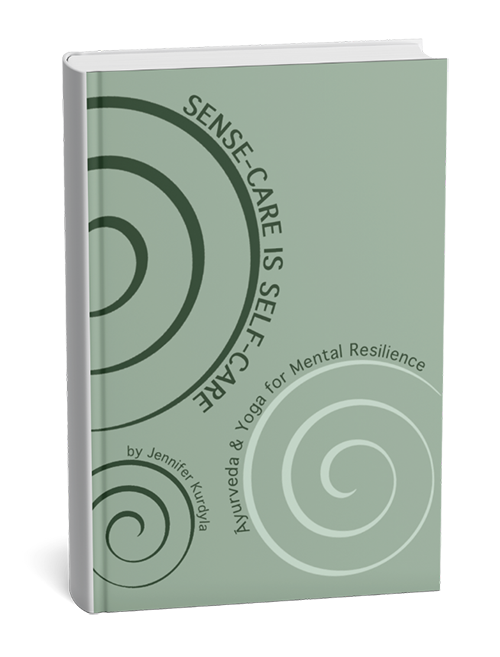
Leading up to the publication of my cookbook Root & Nourish, my co-author Abbey and I did a series of interviews with holistic providers about hormones. Dr. Claudia Welch honored us with a conversation about her speciality, reproductive hormones. She explained most of what you just read in her down-to-earth, but totally brilliant way. I’d read her book, Balance Your Hormones, Balance Your Life, and had already gone down rabbit holes of this stroas with my own health, but that conversation made me think of the situation in a whole new way. Including because of what she said at the end, when we asked, “What’s your one tip for women to support their reproductive hormones?” She said without a hitch, “Living with integrity.”
My jaw literally dropped when I heard this. There were so many herbs, so many treatments, so many diets out there—and “integrity” is most important? Of course, I knew what she meant at a gut (or ovary?) level almost as soon as I snapped out of my shock. Because of course, if we don’t live our lives well, if we don’t know life to be joyful and challenging and all the shades in between, what would be the point of passing on our seeds, our legacy, at all?
Living our own lives well is the best way to ensure that shukra and artava have enough nourishment—rasa, juice, flavor, emotion, pleasure—to exist and do their job. Our job is to experience and learn which flavors are hita (wholesome, beneficial to health) and ahita (unwholesome, harmful to health). The sense of taste implied here is metaphorical but also literal, since the organ of action of the sense of taste is the urinogenitals. And through taste—rasa, formed first in digestion and a prerequisite for shukra/artava—is where we feel in both the body and mind.
In yoga philosophy, the word dharma describes what I believe Dr. Claudia meant in her prescription for balanced hormones. Although dharma is often confused with “career” in Western culture, it’s much more than that: it’s the thing you were meant to do with this life. Each of us has a unique dharma—mine, I believe, is teaching, though the subject and format has shifted wildly over the years and likely will continue to shift; also, maybe “moving,” as in dance and yoga and walking no matter what. Dr. Robert Svoboda explains that the etymology of the word “dharma” is “root,” referring to “that which is established or firm.” While we might imagine scanning our environment “searching” for our dharma with our eyes, out true dharma is what we already are. That which doesn’t need to be sought out, concocted, manipulated, but which we can’t help but choose. It is the field of our influence in this lifetime, which we learn to tend and occupy through our lives. With this imagery, we can consider that we all have a shared dharma connected to our shared terrain, our shared home, of the earth itself. This dharma is sukha, creating and maintaining “good space” for everyone to have what they need and be who they are, including ourselves. When we live with integrity, the water flows easily between fields; no one owns or deserves the rasa of life. There is faith that, even in times of drought or famine or flood, the system will right itself.
These connections between water and earth, rasa and dharma, are indeed how Ayurveda describes fertility. Drawing on an agriculture analogy, the texts name four key factors in fertility:
- Time — the right season to grow what you want;
- The field — having the right space and growing conditions;
- The nourishment (water, sun, food) — to keep the soil rich and support the seeds’ maturation;
- The seeds — you know what they are 🙂
So often in discussions of reproduction, we focus only on the seeds. Are the eggs being released, are there enough of them, are they stuck, are they old? Are the sperm swimming fast enough, are they of good quality, are they smart? Are there favorable or unfavorable genetic variations inside those seeds—and do I even want to know? We focus on the seeds as the thing closest to what we want out of the situation: the new life.
But what if we focused on the field? Observing the highs and lows of the reproductive channels, including my own, there’s been a consistent refrain that people are loathe to admit or recognize, even once it’s worked. Taking care of yourself—the field of your awareness, of your body, which is the manovaha srotas—is the first and most important step in reproductive health, whether you’re trying to conceive or not. This doesn’t mean taking medications (holistic or otherwise), or doing (or not doing) certain activities, or chanting mantras or saying prayers just to get things to “work” the way they are described in a textbook. This means valuing your life. It means tending to the field where you yourself were sown and grown—where your own seeds sprouted. It means feeling at home where you are and appreciating how all the someones who came before you loved themselves into being. There’s a saying that goes, “bloom where you’re planted”—which might refer to a kind of resilience in the face of obstacles; of owning a “weed” mentality of thriving in any circumstances. But it might also mean the work of your life—your dharma—is to beautify the sukha of this moment.
The Bhagavad Gita offers one last potent reminder of the value of the field in our reproductive health. One of this classic yoga text’s famous teachings is: “You have a right to perform your prescribed duties, but you are not entitled to the fruits of your actions. Never consider yourself to be the cause of the results of your activities, nor be attached to inaction” (2/47). I know, it sounded pretty harsh to me when I first heard it, too—especially being of the generation taught that I could be anything I wanted as long as I worked hard. Not being entitled to the “fruits” of my actions felt deflating—without some payoff, some benefit for me, why do anything at all? This verse asks us simply to do the work of tending the field. And when we tend that field, our energy and prana is transferred back into the place whence we came. We become the field—including any seeds that might find their way to us and bloom there.
When we embrace our field-ness, and thereby honor the seeds from which we came, the other side of our reproductive challenges can also find peace: our inheritances. Whether you think of this as genetics or karmas or something in between, we all come into this world with certain weeds that have the potential to take over our sukha. Modern science is showing that even diseases we previously thought to be largely genetic, like Alzheimer’s, are influenced much more by environmental conditions. This isn’t to dismiss the real effect of genes in that smaller-than-we-thought percentage, but it reminds us of our right to living in the present, rather than constricting our lives in fear of the past or the future. We may have been given memories through our bodies we never would have asked for, from our parents and much farther back in time (Ayurveda says we are directly influencing seven generations before and after us). We are not entitled to these “fruits,” either. Instead, we show up to our field, our dharma, and play it.
In our practices this month, we’ll explore the interplay of memory, inheritance, and creativity as they exist in very gross and very subtle forms. Here at the end of the year and in this srotas, we’ve been pulled to extremes of the gross-subtle spectrum: all the fluids and dysfunctions are meeting the veils of spirit and breath. Tethering that wide expanse of existence, our human beings that act as conduits between earth and sky, is our friend the psoas. Known as both the “stress muscle” and the “love muscle,” a supple psoas makes the on/off switch of stress/reproduction less jarring and more resilient. By dwelling in the water center of the body, we also keep things juicy and flowing—rasa-fied—as the macrocosm gets drier and rougher.
The psoas also offers an interesting counterpoint to this notion of creativity that I’ve only touched upon: that this whole conversation about reproduction isn’t limited to making babies. It’s all expression. And so we can look to the other end of the spine, our throat/neck, where we often feel similar tensions as in our hips, both energetic and physical. Seeing these two ends of the body as connected not only widens our field of therapeutic movement (addressing neck pain in the pelvis, and vice versa); it also helps us examine where we might be biasing our creative outputs at the sacrifice of our core. For this, we’ll explore the effects of the moon cycles on our energy. While each of us has our own internal rhythm, especially for menstruating bodies, the moon pulls on the waters of all of our bodies with the same monthly swell. When we pause to notice which direction the tide is flowing, we can have more realistic expectations around our creative output.
From an even more subtle vantage point, we also have an opportunity to dive into deeper meditations, which I’ve been leading us to since we slipped into the yin half of the year way back in June. Now is the time for yoga nidra—often known as “yogic sleep” and practiced as a scripted, guided meditation. But yoga nidra is much more than that; it’s a way to occupy the spaces between the fields of consciousness, and to be with the samskaras that are too deeply buried to be felt when we’re awake. Letting the field of awakeness lie fallow in deep rest, we give our physical bodies—the field of now—a chance to repair and rejuvenate, even as we wander into those other fields that need our attention, too. We create sukha that stretches backwards and forwards in time, revealing the maya (illusion) of time itself.
Although it’s not highlighted as much in the musical, Alexander Hamilton was a fastidious gardener. He spent a good deal of time (and money) toward the end of his life creating beautiful plant-scapes around his home in Harlem, and spending time with his children among the fruit trees and flowers. Things like this—along with this stunning military career, vast yet untrained medical knowledge (he nursed himself and his child to health from yellow fever), prolific writing and oratory skills, and deep passion—are what his “legacy” comprises. Earlier in this piece, I argued that Hamilton appeals to so many because of how it taps into our fear of death. But Alexander’s life was endlessly exciting. His story is full of underdogs and adventures, brushes with death and unrequited love. He wasn’t afraid of the hita or the ahita, and was a paragon of humanness in how his peaks of enlightenment and integrity were coupled with valleys of pride and infidelity. Indeed, it was precisely the moments when he cared more about his legacy than the present that he suffered the most; Eliza (presumably) forgave him for his years-long affair, but when he made that information public, turned inside-out their shukravaha srotas, that was the breaking point.
Hamilton dies when he throws away his shot, pointing his gun to the sky while his nemesis Aaron Burr took deadly aim. But he didn’t throw away his life. Throwing away his shot, refusing to violate his respect for human life, would have been more than enough to instill a legacy. Because even without the banks and legal precedents and writings, and even children, that succeeded him, he lived. He played the field of the great American experiment, of a bastard orphan longing for a family, and became it.